
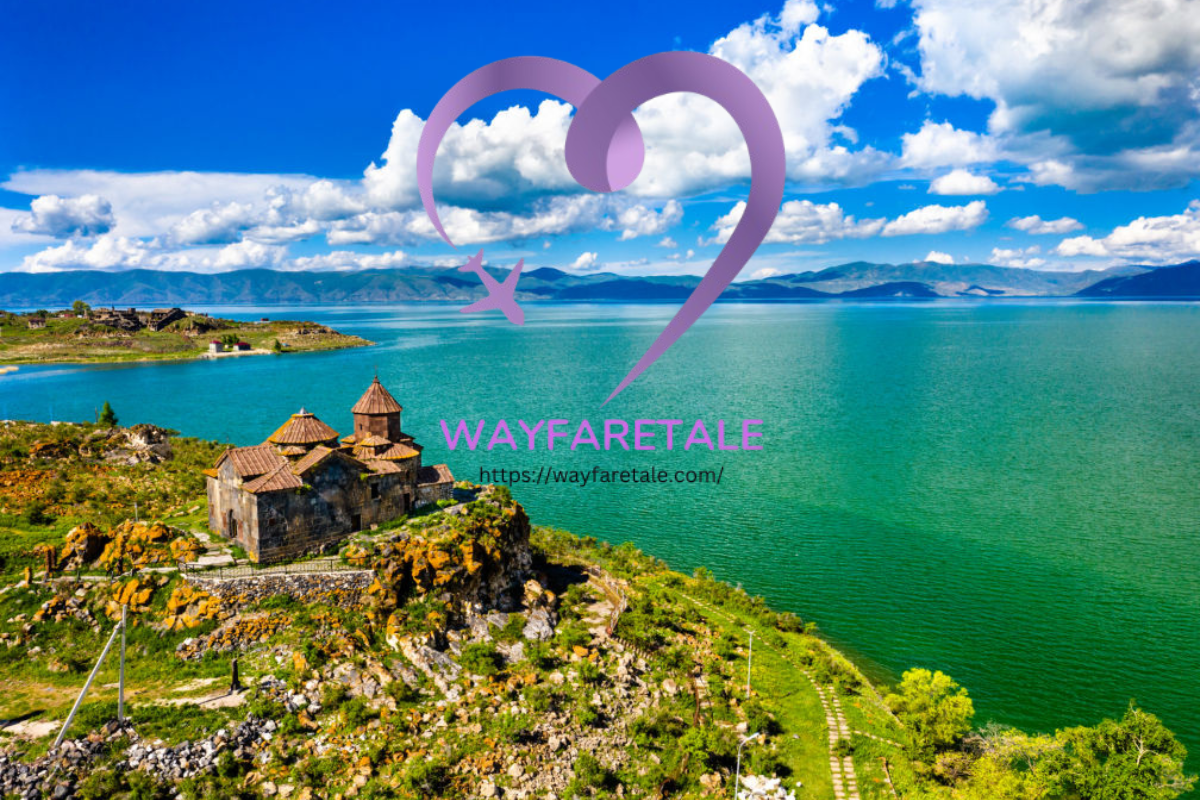
Armenia Road Trip: Epic Itinerary for One Week in Armenia!
Armenia is an incredible destination for a Caucasus road trip. This detailed one-week Armenia road trip itinerary covers the best places in the country that you can visit in 7-10 days.
Armenia is a small but incredibly diverse country with an astonishing amount to see! Winding mountain roads lead through ancient monasteries, dramatic gorges, serene alpine lakes, and snow-capped volcanic peaks. Therefore, embarking on an Armenia road trip is by far the best way to explore this ancient land of hospitality.
With your own wheels, you will be able to explore the best places in Armenia conveniently. Although some sights can be reached by public transport or organized tours, many of the most breathtaking places are only accessible by car.
Based on my experience visiting this fascinating country, I put together this comprehensive one-week Armenia road trip itinerary covering Yerevan, historic monasteries, the stunning Lake Sevan region, dramatic mountain passes, and hidden gems. It also indicates distances traveled, provides an interactive map, and suggests places to stay in Armenia.
Quick Links:
- Car rental tip 1: Check Localrent for competitive rates from local Armenian providers, or use Discovercars to compare prices across multiple rental companies and save up to 70% on your rental rate.
- Stay: I booked all my accommodation in Armenia on Booking.com.
- Travel Insurance: Purchase reliable travel insurance at Heymondo or SafetyWing (the most affordable option on the market).
- Tours: Check the best guided tours on Viator and GetYourGuide.
Summary of My Armenia Road Trip Route
- Day 1: Yerevan – Arrival and City Exploration
- Day 2: Geghard Monastery – Garni Temple – Symphony of Stones
- Day 3: Khor Virap – Noravank Monastery – Tatev Monastery via Wings of Tatev
- Day 4: Tatev – Selim Pass – Lake Sevan – Dilijan
- Day 5: Dilijan – Haghartsin Monastery – Goshavank – Ijevan
- Day 6: Debed Canyon – Haghpat – Sanahin – Alaverdi
- Day 7: Return to Yerevan via Amberd Fortress – Aragats Mountain
If I had 5 Days in Armenia, my itinerary would include: Yerevan – Geghard & Garni – Khor Virap – Noravank – Tatev – Lake Sevan – Dilijan.
If I had 10 Days in Armenia, I would add: Goris rock formations, Areni Wine Region, Jermuk Waterfall, additional time in Debed Canyon, and explore more of the Aragatsotn Province.
Armenia Road Trip Planning Tips
Renting a Car in Armenia
Major car rental companies operate from Zvartnots International Airport in Yerevan. I recommend checking either Localrent or DiscoverCars for the best rates. These car search websites typically offer lower prices compared to booking directly with major agencies. Localrent specializes in the Caucasus region and often provides competitive rates without hefty deposits.
Driving in Armenia
Driving is an excellent way to explore beautiful Armenia. Having your own vehicle allows you to access every highlight and remote monastery tucked away in mountain valleys. You’ll have complete freedom to stick to your own schedule and make spontaneous stops at viewpoints.
Armenia is relatively small, making distances between major attractions manageable. However, mountain roads can be narrow and winding, which slows travel time considerably. For example, covering 50 km on a serpentine mountain road might take 1.5 hours. The good news is that most main roads are in decent condition, though some rural routes can be bumpy.
Important driving considerations:
- Roads in rural areas are often narrow, sometimes just wide enough for one car
- Take hairpin bends slowly and honk before blind corners
- Local drivers can be aggressive, especially in Yerevan
- Mountain roads may be closed in winter due to snow
- Always keep your tank at least half full – gas stations are sparse in remote areas
Where to Stay During the Armenia Road Trip
Throughout my Armenia road trip, I prioritized privately owned guesthouses and family-run hotels over large chains. This approach not only saves money but also provides authentic Armenian hospitality and home-cooked meals. Armenian hosts are incredibly warm and welcoming – expect to be offered endless cups of Armenian coffee and homemade cognac!
When searching for accommodation with a rental car, parking availability is crucial. Each place I booked had either private parking or safe street parking nearby.
Accommodation: I book all my stays through Booking.com, which offers excellent variety and competitive prices. As a returning customer, you receive Genius discounts (10-30%) and mobile-exclusive deals through their app.
Tip: Always check cancellation policies and opt for flexible cancellation terms when possible. I typically book accommodations that allow cancellation close to my travel dates, providing flexibility if plans change.
Quick Summary of Where I Stayed:
I booked all my Armenia accommodation through Booking.com. Detailed comments on each property appear later in this post at the end of each day section.
Hotel List:
- Yerevan – Hostel Yerevan (Budget option in city center) – 2 nights
- Goris – Mirhav Hotel (Near Tatev region) – 1 night
- Lake Sevan area – Tufenkian Avan Marak Tsapatagh Hotel (Lakeside location) – 1 night
- Dilijan – Old Dilijan Complex (Charming traditional guesthouse) – 2 nights
- Yerevan – Same accommodation on return – 1 night
What to Expect in Armenia?
In Armenia, you’ll discover one of the world’s oldest Christian nations with breathtaking monastery complexes perched on dramatic cliffsides. You’ll explore ancient temples dating back to pre-Christian times, witness the stunning turquoise waters of Lake Sevan surrounded by mountains, and drive through deep gorges carved over millennia.
Armenian cuisine will delight you with fresh lavash bread baked in underground ovens, succulent khorovats (Armenian barbecue), and the world-famous Armenian cognac that rivals French brandies. The country’s wine heritage dates back over 6,000 years, making it one of the oldest wine-producing regions on Earth.
You’ll be amazed by Armenian hospitality – locals will go out of their way to help you, invite you for coffee, and share stories of their ancient culture. Mount Ararat, Armenia’s holy mountain (though currently in Turkey), dominates the skyline from Yerevan and numerous viewpoints throughout the country.
Adventure seekers can hike in the pristine Dilijan National Park, ride the longest reversible cable car in the world to Tatev Monastery, explore Soviet-era architecture in Yerevan, and discover hidden waterfalls in lush gorges.
How Many Days Do You Need in Armenia?
Based on my experience, one week in Armenia is sufficient to cover the major highlights and get a genuine feel for the country. In 7 days, you can visit the most important monasteries, experience both mountain and lake landscapes, and immerse yourself in Armenian culture.
For those with only 5 days, you can still see the essential sights by focusing on the “Golden Circle” route around Yerevan and making one trip to Tatev. With 10 days, you’ll have time to explore more remote regions, spend leisure time in mountain resorts like Jermuk, and truly relax into the slower pace of Armenian life.
This itinerary is easily adjustable whether you’re flying into Yerevan or arriving overland from Georgia or Iran.
When to Visit Armenia?
The best time to visit Armenia is during spring (April-June) and autumn (September-October). These shoulder seasons offer pleasant temperatures, fewer tourists, and stunning landscapes – spring brings wildflowers and green mountains, while autumn offers golden foliage and harvest season.
Summer (July-August) is perfect for visiting high-altitude areas and Lake Sevan, though Yerevan can be scorching hot (35-40°C). This is peak season, so expect more tourists at major sites and higher accommodation prices.
Winter (November-March) is cold with snow covering mountain roads, making some areas inaccessible. However, Yerevan remains pleasant and you’ll experience a different side of Armenia with fewer tourists. The Debed Canyon road can be challenging in winter.
Budget for Your Road Trip in Armenia
Armenia is one of the most affordable destinations in the Caucasus and much cheaper than most European countries. Here’s a rough breakdown of expected costs:
- Accommodation: $20-$40/night for a comfortable guesthouse or hotel room
- Dining out: $15-$30/day depending on where and what you eat (traditional Armenian meals are very affordable)
- Car Rental: $25-$45/day for a car booked in advance
- Fuel: Approximately $0.70-0.80/liter (2024 prices)
- Monastery entrance fees: Most are free, though donations are appreciated
- Cable car at Tatev: $12-15 for round trip
Armenia One-Week Road Trip Itinerary Day by Day
For those wanting a comprehensive understanding of what Armenia offers, here’s my day-by-day breakdown of the route I took during my week-long road trip through this ancient land.
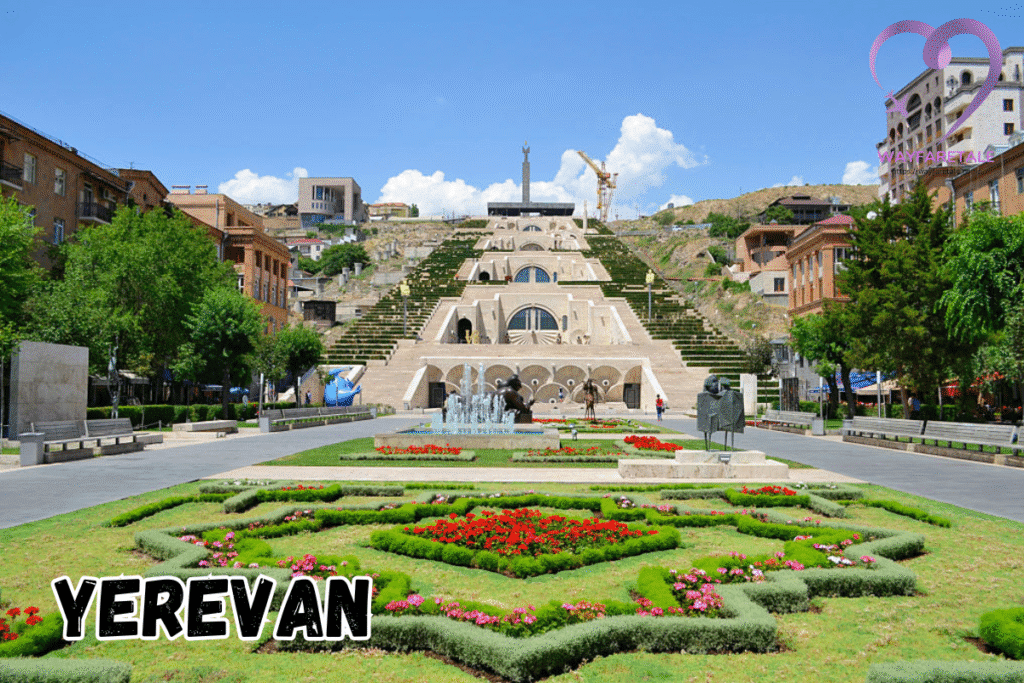
Day 1: Yerevan – Arrival and City Exploration
- Distance covered: 15-20 KM (city exploration)
- Total drive time: N/A (walking recommended)
- Overnight in: Yerevan (2 consecutive nights)
After landing at Zvartnots International Airport, I picked up my rental car and drove the 12 km into Yerevan. However, I immediately parked it at my accommodation – exploring Yerevan on foot is far more enjoyable than navigating the chaotic traffic.
Yerevan, known as the “Pink City” due to its distinctive rose-colored tuff stone buildings, is one of the world’s oldest continuously inhabited cities, founded in 782 BC. The city beautifully blends ancient history with Soviet architecture and modern developments.
Things to Do in Yerevan
Explore Republic Square (Hraparak)
The heart of Yerevan is this magnificent square surrounded by stunning examples of Armenian architecture. Designed in the 1920s-1950s, the buildings showcase the distinctive pink and yellow tuff stone that gives Yerevan its nickname. In the evening, the musical fountain show transforms the square into a magical spectacle with synchronized water, lights, and music.
USEFUL TIP: Visit Republic Square twice – during the day to admire the architecture and take photos, and after 9 PM in summer (8 PM in spring/autumn) for the fountain show.
Walk Along Northern Avenue
This pedestrian boulevard connects Republic Square to the Opera House and is lined with cafes, restaurants, and shops. It’s perfect for people-watching while sipping Armenian coffee. The avenue showcases contemporary Yerevan architecture and is always bustling with locals and tourists.
Visit the Cascade Complex
The Cascade is a giant stairway made of limestone that towers over Yerevan, connecting the downtown area with the Victory Park district. Climbing the 572 steps (or taking the free escalators inside) rewards you with spectacular panoramic views of the city with Mount Ararat in the background.
Inside the Cascade, you’ll find the Cafesjian Center for the Arts, displaying modern and contemporary art. Outside, the complex features numerous sculptures by renowned artists like Botero and Plensa.
PHOTOGRAPHY TIP: Go to the top of Cascade for sunset – the view of Yerevan with Mount Ararat glowing in the evening light is absolutely magical. Arrive at least 30 minutes before sunset to secure a good spot.
Explore the Armenian Genocide Memorial Complex (Tsitsernakaberd)
This sobering but important site commemorates the 1.5 million Armenians who perished in the 1915 genocide. The memorial includes an eternal flame, a museum, and the 44-meter stele symbolizing the rebirth of the Armenian people. It’s a deeply moving experience that provides essential context for understanding Armenian history and identity.
Visit the Vernissage Market
Open weekends, this sprawling open-air market near Republic Square is the best place to buy Armenian handicrafts, Soviet memorabilia, paintings, carpets, jewelry, and antiques. Even if you’re not buying, wandering through the stalls provides fascinating insights into Armenian arts and crafts. Bargaining is expected and part of the fun!
Sample Armenian Cuisine
Yerevan boasts an incredible food scene. Don’t miss trying:
- Khorovats: Armenian barbecued meat, incredibly tender and flavorful
- Dolma: Grape leaves stuffed with meat and rice
- Lavash: Traditional thin flatbread baked in underground ovens
- Khash: A traditional soup made from cow’s feet (if you’re brave!)
- Armenian cognac: Visit the Ararat Brandy Factory for a tour and tasting
RESTAURANT RECOMMENDATION: For authentic Armenian cuisine, try Tavern Yerevan near the Cascade. For a more upscale experience, Dolmama offers creative takes on traditional dishes in a beautiful setting.
Where to Stay in Yerevan?
For your first nights in Armenia, I recommend staying in central Yerevan within walking distance of Republic Square and the Cascade. The city center is compact and walkable, making it unnecessary to drive.
I stayed at Hostel Yerevan, a budget-friendly option with private rooms available, excellent location, and helpful staff who provided great tips for my road trip. The hostel has a lovely terrace where travelers gather in the evenings.
For those seeking more comfort, the area around the Opera House offers numerous mid-range hotels with excellent locations. Boutique hotels in the Cascade area provide upscale accommodation with spectacular city views.
Book your stay in Yerevan through Booking.com
Evening Activity
After exploring the city, I wandered back to Republic Square for the fountain show at 9 PM. Watching the illuminated fountains dance to music while surrounded by pink-lit buildings was a perfect end to my first day in Armenia. Locals gather here every evening, creating a wonderful community atmosphere.
Later, I joined other travelers at one of the outdoor cafes along Northern Avenue, sipping Armenian coffee and watching the city come alive at night. Yerevan has a surprisingly vibrant nightlife, with bars and clubs staying open until the early morning hours.
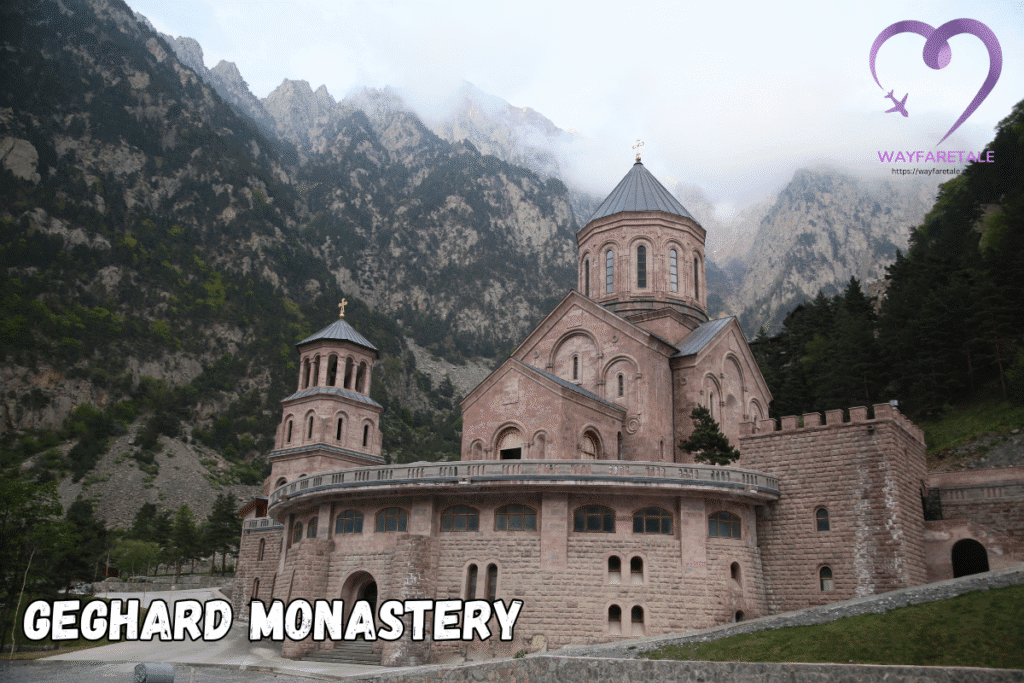
Day 2: Geghard Monastery, Garni Temple, and Symphony of Stones
- Distance covered: 80 KM
- Total drive time: 2 HRS (round trip from Yerevan)
- Overnight in: Yerevan
Day two begins with one of Armenia’s most popular day trips from Yerevan. I woke up early at 6 AM to beat the tour buses that typically arrive at these UNESCO World Heritage sites around 10 AM. This early start proved to be one of my best decisions – I had both Geghard and Garni almost entirely to myself.
GARNI TEMPLE
Explore the Only Standing Greco-Roman Temple in the Former Soviet Union
My first stop was Garni Temple, located about 30 km east of Yerevan. The drive itself is scenic, following the Azat River gorge with increasingly dramatic landscapes. Built in the 1st century AD by Armenian King Trdat I, this pagan temple is dedicated to Mihr, the god of the sun.
What makes Garni Temple extraordinary is that it’s the only Greco-Roman colonnaded building in Armenia and the former Soviet territories. After Armenia adopted Christianity in 301 AD, most pagan temples were destroyed, but Garni survived – possibly because it served as a royal summer residence.
The temple’s reconstruction was completed in the 1970s after it was destroyed by an earthquake in 1679. Standing on the edge of a triangular cliff overlooking the Azat River gorge, the temple offers breathtaking views of the surrounding mountains and the geometric rock formations below.
USEFUL TIP: Arrive at Garni around 8 AM when it opens. The morning light is perfect for photography, and you’ll avoid the crowds that arrive from 10 AM onwards. The entrance fee is 1,500 AMD (approximately $4).
Don’t Miss the Symphony of Stones
From Garni Temple, I highly recommend taking the short hike down to the Symphony of Stones (also called the Basalt Organ). This natural wonder consists of perfectly symmetrical hexagonal basalt columns that look almost man-made. The columns reach up to 50 meters high and resemble organ pipes – hence the name.
The trail to the Symphony of Stones starts near Garni Temple and takes about 20-30 minutes to descend. The path can be steep and rocky, so wear proper shoes. The view from below, looking up at these geometric formations with the Azat River flowing beside them, is absolutely spectacular.
PHOTOGRAPHY TIP: The best light for photographing the Symphony of Stones is mid-morning to early afternoon when the sun illuminates the columns from above.
GEGHARD MONASTERY
Visit Armenia’s Most Mystical Cave Monastery
After Garni, I drove just 10 km further into the gorge to reach Geghard Monastery, one of Armenia’s most remarkable architectural achievements. The name “Geghard” means “spear” and refers to the legendary spear that wounded Jesus during the crucifixion, which was allegedly brought to Armenia by Apostle Thaddeus and kept at this monastery for centuries.
Founded in the 4th century, though most current structures date from the 13th century, Geghard is unlike any monastery I’ve ever visited. Parts of the complex are carved directly into the surrounding rock face, creating a mysterious atmosphere enhanced by the excellent acoustics inside the cave churches.
What to Explore at Geghard:
The Main Church (Katoghike) The main chapel, built in 1215, features beautiful khachkars (carved stone crosses) and an incredible interior. When I arrived early, a priest was chanting morning prayers, and the acoustics made the experience profoundly moving. The sound reverberates through the stone in an otherworldly way.
The Upper Cave Church (Avazan) Climb the stairs to the upper cave church, completely carved out of rock. The natural light filtering through the small opening in the ceiling creates a mystical atmosphere. The rock-carved chamber feels ancient and spiritual.
The Family Chapel of Proshyan Princes This section features the most intricate rock carvings, including a famous bas-relief of two lions chained together, symbolizing the Proshyan family emblem. The craftsmanship is extraordinary considering it was all carved from solid rock.
INSIDER TIP: Local women sell homemade dried fruits, lavash, and gata (Armenian sweet bread) near the entrance. Buy some gata – it’s delicious and supports local families. Also, listen for the singers who sometimes perform inside the monastery; their voices echoing through the stone chambers create an unforgettable experience.
Why Early Arrival Matters: By 10 AM, Geghard becomes crowded with tour buses. I arrived at 9 AM and had the monastery almost to myself for 45 minutes – exploring the cave churches in relative solitude made the experience deeply spiritual rather than touristy.
The entrance to Geghard is free, though donations are welcome. The monastery is a UNESCO World Heritage Site and absolutely deserves its recognition.
TRADITIONAL ARMENIAN LUNCH
On the way back to Yerevan, I stopped at one of the restaurants in Garni village to experience traditional Armenian food preparation. Many restaurants here offer demonstrations of lavash bread making in underground tonir ovens. Watching the dough being slapped onto the sides of the hot clay oven and peeling off the perfectly baked flatbread minutes later is fascinating.
I ordered khorovats with lavash and fresh vegetables – simple but absolutely delicious. The meal, including Armenian coffee, cost only about $8.
RESTAURANT RECOMMENDATION: Try “Old Garni” restaurant with a terrace overlooking the gorge, or any of the family-run establishments in the village. They all offer authentic experiences.
Afternoon in Yerevan
Returning to Yerevan by early afternoon, I spent the rest of the day exploring neighborhoods I’d missed the previous day. I visited the Matenadaran (Institute of Ancient Manuscripts), home to over 17,000 ancient manuscripts and one of the world’s richest depositories of medieval manuscripts.
Later, I wandered through Yerevan’s Kond neighborhood, the oldest district in the city. Walking through its narrow streets lined with traditional Armenian houses feels like stepping back in time – a stark contrast to the modern buildings of central Yerevan.
In the evening, I took the funicular up to Victory Park (also called Kok Tobe Park) to visit the Mother Armenia statue and enjoy panoramic sunset views over the entire city with Mount Ararat in the background. The park also has a small amusement park and several cafes.
Day 3: Khor Virap, Noravank Monastery, and Tatev Monastery
- Distance covered: 320 KM
- Total drive time: 5 HRS 30 MIN
- Overnight in: Goris (near Tatev)
This was the longest driving day of my Armenia road trip, but also one of the most rewarding. I departed Yerevan at 6 AM, heading south toward the Turkish border and one of Armenia’s most iconic views.
KHOR VIRAP MONASTERY
The Best View of Mount Ararat in Armenia
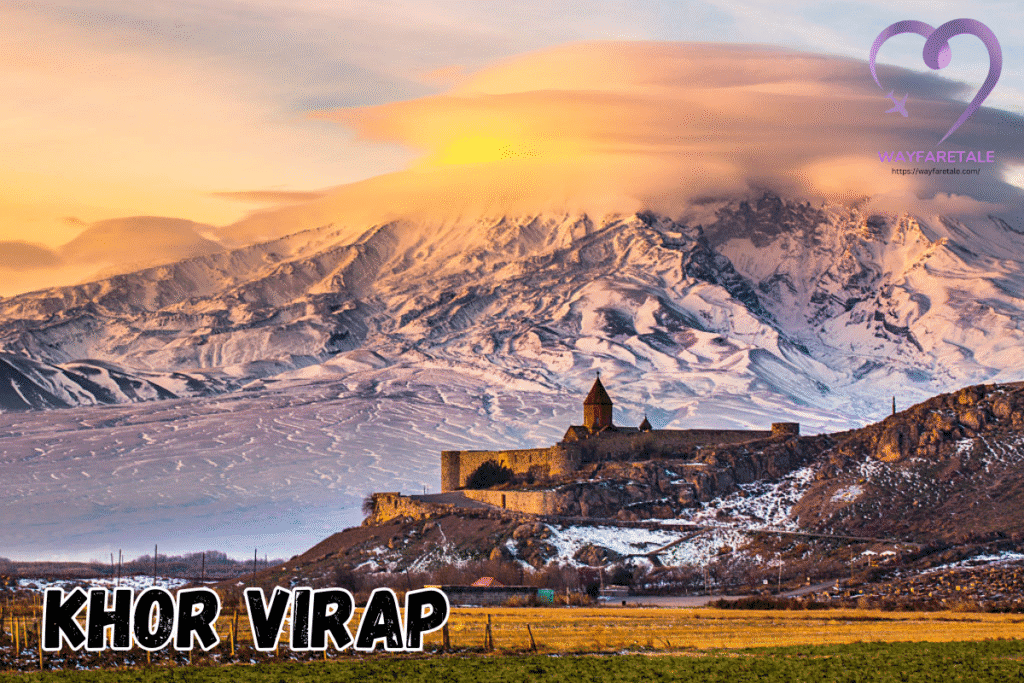
Located just 40 km south of Yerevan, Khor Virap Monastery sits dramatically close to the Turkish border with Mount Ararat dominating the skyline. This is hands down the best place to photograph Armenia’s holy mountain.
Khor Virap means “deep dungeon” and refers to the underground pit where Saint Gregory the Illuminator was imprisoned for 13 years by King Trdat III. After Gregory miraculously healed the king, Trdat converted to Christianity in 301 AD, making Armenia the first nation to adopt Christianity as its state religion.
What to Do at Khor Virap:
Photograph Mount Ararat The view of Mount Ararat from Khor Virap is iconic – the snow-capped double peak (Greater and Lesser Ararat) rising majestically behind the monastery creates one of the most photographed scenes in Armenia. Although Ararat is now in Turkey, it remains deeply symbolic to Armenians as their spiritual homeland.
Visit the Underground Dungeon You can descend via a narrow ladder into the actual pit where Gregory was imprisoned. It’s dark, claustrophobic, and quite deep (about 6 meters), but experiencing this historical site firsthand is powerful. Bring a flashlight if you have one.
PHOTOGRAPHY TIP: The best light for photographing Mount Ararat from Khor Virap is early morning (6-9 AM) when the mountain is most likely to be clear and the light is soft. By afternoon, clouds often obscure the peak. I arrived at 7:30 AM and had perfect conditions.
IMPORTANT NOTE: Mount Ararat isn’t always visible – clouds can hide it completely. If you’re unlucky with weather, the monastery itself is still beautiful, but the view won’t be nearly as spectacular.
The entrance fee is minimal (around 1,000 AMD/$2.50), and there’s a decent cafe nearby if you need refreshments.
NORAVANK MONASTERY
Armenia’s Most Dramatically Located Monastery
After Khor Virap, I drove southeast through the arid Vayots Dzor region toward Noravank Monastery. The journey takes about 90 minutes, following the Arpa River gorge. The landscape transitions from flat plains to dramatic red rock canyons – the scenery itself is worth the drive.
Noravank Monastery, built in the 13th century, sits at the end of a narrow gorge surrounded by sheer red cliffs. The setting is absolutely spectacular – the contrast between the honey-colored monastery buildings and the red rock walls creates stunning visual drama.
What Makes Noravank Special:
The Church of St. Astvatsatsin This two-story church, built in 1339, features a narrow exterior staircase leading to the upper chapel. The staircase is quite precarious (no handrails originally, though they’ve added some support), climbing the stone steps with a sheer drop on one side gets your adrenaline pumping. The carved tympanum above the entrance, showing God with Adam and Eve, is one of the finest examples of Armenian sculpture.
The Main Church of St. Karapet The oldest structure in the complex, this church houses beautiful khachkars and has a serene interior with excellent acoustics.
The Red Rock Gorge Take time to walk along the trail leading into the gorge behind the monastery. The red rock formations are gorgeous, especially in late afternoon light. The trail is easy and offers different perspectives of the monastery against the cliffs.
USEFUL TIP: Visit Noravank in late afternoon (3-5 PM) when the sun illuminates the red cliffs and creates warm, golden light on the monastery stones. Most tour groups visit earlier, so you’ll also avoid crowds.
I spent about 1.5 hours at Noravank, exploring the churches, climbing the scary staircase (worth it!), and walking the gorge trail. There’s a restaurant at the entrance serving traditional Armenian dishes if you’re hungry.
DRIVE TO TATEV VIA GORIS
From Noravank, I continued south toward Tatev Monastery, another 2.5 hours of driving through increasingly spectacular mountain scenery. The route passes through Yeghegnadzor and then winds through the mountains to Goris, a charming town surrounded by unique rock formations.
STOP IN GORIS
I arrived in Goris around 4 PM and checked into my hotel. Goris is a lovely mountain town worth exploring. The old cave dwellings carved into the rock formations on the eastern edge of town (Old Khndzoresk) are fascinating – people lived in these caves until the 1950s!
If you have time before sunset, drive or walk to the viewpoint overlooking Goris and the surrounding rock pyramids. The geological formations here are unique and quite photogenic.
TATEV MONASTERY AND WINGS OF TATEV
Ride the World’s Longest Reversible Cable Car
From Goris, Tatev Monastery is only 25 km away, but I decided to save the actual monastery visit for early the next morning. However, I couldn’t resist driving to the Wings of Tatev cable car station before it closed (it operates until 6:30 PM in summer, 5:30 PM in winter).
The Wings of Tatev cable car holds the Guinness World Record for the longest reversible aerial tramway – it stretches 5.7 km across the spectacular Vorotan Gorge. The 12-minute journey offers absolutely breathtaking views of the deep canyon, waterfalls, and the medieval Tatev Monastery perched on the cliff edge at the far end.
I purchased a one-way ticket up (planning to visit the monastery the next morning) just to experience the cable car at sunset. The golden hour light streaming through the gorge was magical, and watching the cable car glide across the seemingly impossible span is thrilling.
CABLE CAR TIPS:
- Cost: Approximately 5,000 AMD ($12) one way, 7,000 AMD ($17) round trip
- Operating hours: Summer (May-October) 9:00-18:30, Winter 9:00-17:30
- Best time: Early morning or late afternoon for the best light
- Don’t look down if you’re afraid of heights – the gorge is over 300 meters deep in places!
After the cable car experience, I returned to Goris for the night, excited to explore Tatev Monastery properly the next morning.
Where to Stay Near Tatev?
I stayed at Mirhav Hotel in Goris, a comfortable mid-range hotel with excellent views of the surrounding rock formations. The hotel restaurant serves delicious Armenian cuisine, and the staff were incredibly helpful with recommendations for the area.
Goris has several accommodation options ranging from budget guesthouses to upscale hotels. Staying here gives you a good base for exploring both Tatev Monastery and the unique rock formations around the town.
Book your stay in Goris through Booking.com
Dinner Recommendation
For dinner, I tried Chivas Restaurant in the center of Goris, which came highly recommended by my hotel host. The traditional Armenian dishes were excellent, particularly the khorovats and zhingalov hats (flatbread stuffed with herbs). The atmosphere was cozy and authentically Armenian, with local families dining alongside tourists.
Day 4: Tatev Monastery, Selim Pass, Lake Sevan, and Dilijan
- Distance covered: 280 KM
- Total drive time: 5 HRS 15 MIN
- Overnight in: Dilijan (2 consecutive nights)
TATEV MONASTERY
Explore Armenia’s Most Important Medieval Monastery Complex
I woke up at 6 AM and drove directly to the Wings of Tatev cable car station for the first ride of the day at 9 AM. Arriving early meant I had the cable car practically to myself – just me and a handful of other early risers gliding across the breathtaking Vorotan Gorge in the soft morning light.
Tatev Monastery, founded in the 9th century, stands majestically on the edge of a basalt plateau overlooking the gorge. During medieval times, this was one of Armenia’s most important spiritual and educational centers, housing a prestigious university that had up to 500 students studying theology, philosophy, mathematics, and the arts.
What to Explore at Tatev:
The Church of Saints Paul and Peter The main cathedral, built in 895-906 AD, dominates the complex with its beautiful proportions and stone carvings. The interior features well-preserved frescoes and religious artwork. I was lucky to witness a morning service with priests chanting in the ancient tradition – the acoustics made it deeply moving.
The Gavazan Column This unique 8-meter high swaying pillar (also called the “staff of Moses”) is an engineering marvel. Built in 904, it served as a seismometer, tilting when earth tremors occurred to warn monks of approaching armies or earthquakes. Even today, you can slightly rock it with your hand – an incredible feat of medieval engineering.
The Oil Mill Don’t miss the old oil press building at the edge of the complex. From here, you get spectacular views down into the Vorotan Gorge, with the river winding far below. This was my favorite spot for photographs.
Walk to the Natural Bridge A short trail leads from the monastery to a natural stone bridge called Devil’s Bridge (Satani Kamurj). The 20-minute walk down offers different perspectives of the gorge. At the bottom, there are hot springs and mineral water flowing from the rocks (though the walk back up is quite steep).
USEFUL TIP: Spend at least 2-3 hours at Tatev to fully explore the monastery complex and walk the surrounding trails. The site is vast, and rushing through would be a shame. There’s a small cafe near the cable car station if you need refreshments.
PHOTOGRAPHY TIP: Morning light is ideal for photographing Tatev from the cable car and the monastery itself. The sun illuminates the complex beautifully without harsh shadows.
The monastery entrance is free, though donations are appreciated. The entire experience – cable car ride and monastery exploration – was one of the highlights of my entire Armenia road trip.
KHNDZORESK CAVE VILLAGE
Optional Stop: Ancient Cave Settlement
On the drive from Tatev back toward the main highway, I made a detour to Old Khndzoresk, an extraordinary abandoned cave village visible from Goris. People lived in these caves carved into the rock formations until the 1950s when the Soviet government relocated them to modern buildings.
A dramatic 160-meter suspension bridge now spans the gorge, connecting the old settlement to the new village. Walking across this swaying bridge with the ancient caves and church ruins scattered across the cliffs is an unforgettable experience.
The site is barely developed for tourism, which adds to its authentic, eerie atmosphere. Exploring the abandoned caves and imagining life here just 70 years ago was fascinating. Budget about an hour if you decide to visit.
SELIM PASS AND CARAVANSERAI
Drive One of Armenia’s Most Scenic Mountain Passes
Leaving the southern region, I headed north toward Lake Sevan via the spectacular Selim Pass (also called Vardenyats Pass), which reaches 2,410 meters elevation. This ancient route was part of the historic Silk Road connecting Armenia to Persia and beyond.
The drive is absolutely stunning – winding mountain roads with panoramic views, often with no other cars in sight. The landscape transitions from green valleys to barren alpine terrain and back again. Take your time and stop frequently for photos.
Selim Caravanserai
At the highest point of the pass stands the remarkably well-preserved Selim Caravanserai, built in 1332. This medieval roadside inn provided shelter for merchants and their animals traveling the Silk Road. Despite being nearly 700 years old, much of the structure remains intact.
You can freely explore the interior, walking through the same stone chambers where medieval traders once rested with their camels and goods. Information boards explain the caravanserai’s history and the Silk Road’s importance to Armenia.
The views from the caravanserai, looking across the volcanic landscape toward Lake Sevan in the distance, are spectacular. I spent 30 minutes here soaking up the history and scenery.
DRIVING TIP: The Selim Pass road is well-maintained but narrow in sections with steep drops. Drive carefully, especially if weather is poor. The pass can be closed in winter due to heavy snow (November-April), so check conditions in advance.
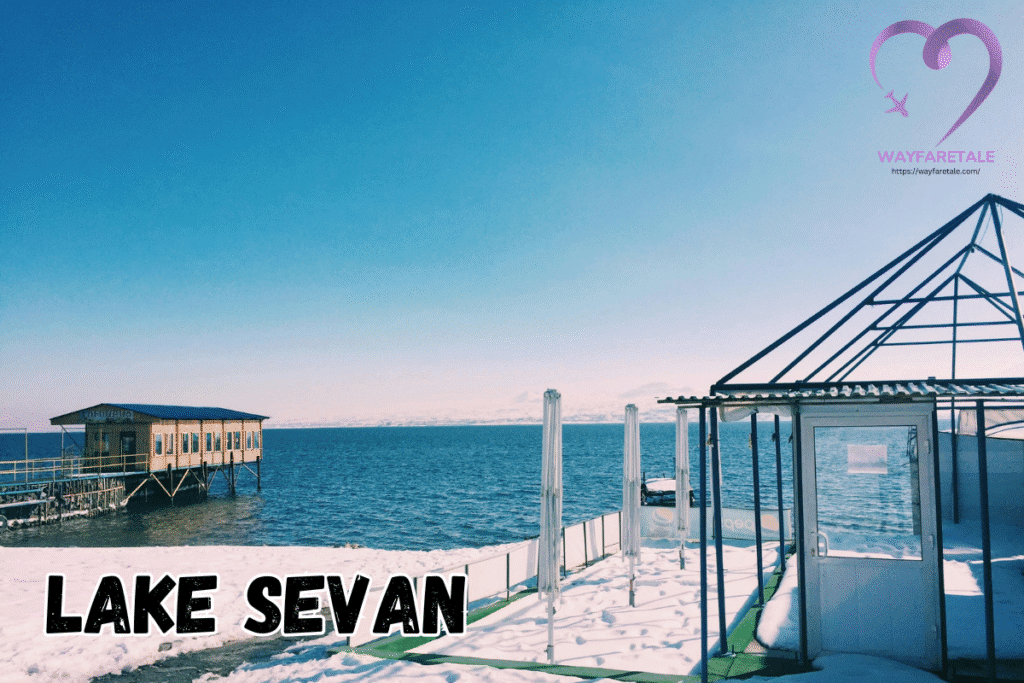
LAKE SEVAN
Discover the Blue Pearl of Armenia
After descending from Selim Pass, the shimmering turquoise waters of Lake Sevan come into view – a breathtaking sight after the barren mountain pass. Lake Sevan is one of the largest high-altitude lakes in the world, sitting at 1,900 meters above sea level. Locals call it the “Blue Eye of Armenia.”
The lake’s color is extraordinary – varying from deep blue to bright turquoise depending on the light and depth. Surrounded by mountains on all sides, the setting is postcard-perfect.
Sevanavank Monastery
My first stop was Sevanavank Monastery, perched on a peninsula jutting into the lake (it used to be an island until Soviet-era water diversion lowered the lake level). The monastery, founded in 874, consists of two churches with stunning views across the entire lake.
Climbing the 200+ steps to reach the monastery is worth it for the panoramic views alone. From here, you can see the full expanse of Lake Sevan stretching to the horizon, with mountains framing the scene. The churches themselves are beautiful examples of medieval Armenian architecture with intricate khachkars.
PHOTOGRAPHY TIP: Visit Sevanavank in the afternoon when the sun lights up the lake, making the water glow in brilliant blue. Sunset here is magical but expect crowds.
Lake Sevan Activities
Lake Sevan is Armenia’s summer playground. Along the shores, especially near Sevan town, you’ll find:
- Sandy and pebble beaches for swimming (water is cold even in summer!)
- Restaurants serving fresh ishkhan (Sevan trout) – absolutely delicious
- Water sports and boat rentals
- Beach resorts and guesthouses
I stopped for a late lunch at one of the lakeside restaurants near Sevanavank, trying the famous Sevan trout grilled with herbs and lemon. Fresh from the lake, it was some of the best fish I’ve ever tasted.
USEFUL TIP: The eastern shore of Lake Sevan is less developed and more scenic than the crowded western shore. If you have time, drive along the eastern shore for more authentic village experiences and quieter beaches.
Overnight Near Lake Sevan
For those wanting to experience Lake Sevan’s beauty at sunrise and sunset, I recommend staying overnight near the lake. I stayed at Tufenkian Avan Marak Tsapatagh Hotel on the less-developed eastern shore. This boutique hotel offers stunning lake views, a private beach, and excellent Armenian cuisine.
Waking up to sunrise over Lake Sevan, with the mountains reflected in the still water, was absolutely magical. The hotel is more upscale than my usual accommodations but worth the splurge for the location and experience.
Book your stay at Lake Sevan through Booking.com
Drive to Dilijan
From Lake Sevan, I drove northwest along the lake’s shore and then inland to Dilijan, known as the “Little Switzerland of Armenia.” The 50 km drive takes about an hour through increasingly lush, forested landscapes – a refreshing change from the arid southern regions.
DILIJAN
Armenia’s Most Charming Mountain Town
Dilijan is a spa resort town nestled in the forested mountains of Tavush Province. The town has a completely different atmosphere from anywhere else I visited in Armenia – it’s greener, cooler, and feels almost alpine.
The Old Town (Sharambeyan Street) has been beautifully restored with traditional Armenian architecture, artisan workshops, craft shops, and cozy cafes. Walking along the cobblestone street feels like stepping back into 19th-century Armenia.
I arrived in Dilijan in the early evening, checked into my guesthouse, and spent a couple of hours wandering the Old Town. The relaxed mountain atmosphere was perfect after several days of intense sightseeing and long drives.
DINNER RECOMMENDATION: Try Haykanoush Restaurant in Old Dilijan for traditional Armenian food in an authentic setting. The tolma (stuffed vegetables) and local trout were excellent.
Where to Stay in Dilijan?
I stayed at Old Dilijan Complex, a charming traditional guesthouse in a beautifully restored 19th-century building. The rooms feature Armenian carpets, wooden furniture, and modern amenities. The hosts were incredibly welcoming and helpful with hiking recommendations for Dilijan National Park.
The location is perfect – right in the heart of Old Dilijan with restaurants, shops, and trails nearby. Breakfast included traditional Armenian specialties and homemade preserves.
Book your stay in Dilijan through Booking.com
Day 5: Haghartsin Monastery, Goshavank, and Dilijan National Park
- Distance covered: 90 KM
- Total drive time: 2 HRS 30 MIN
- Overnight in: Dilijan
Having spent the previous day on long drives, I dedicated day five to exploring the beautiful monasteries and nature around Dilijan at a more leisurely pace.
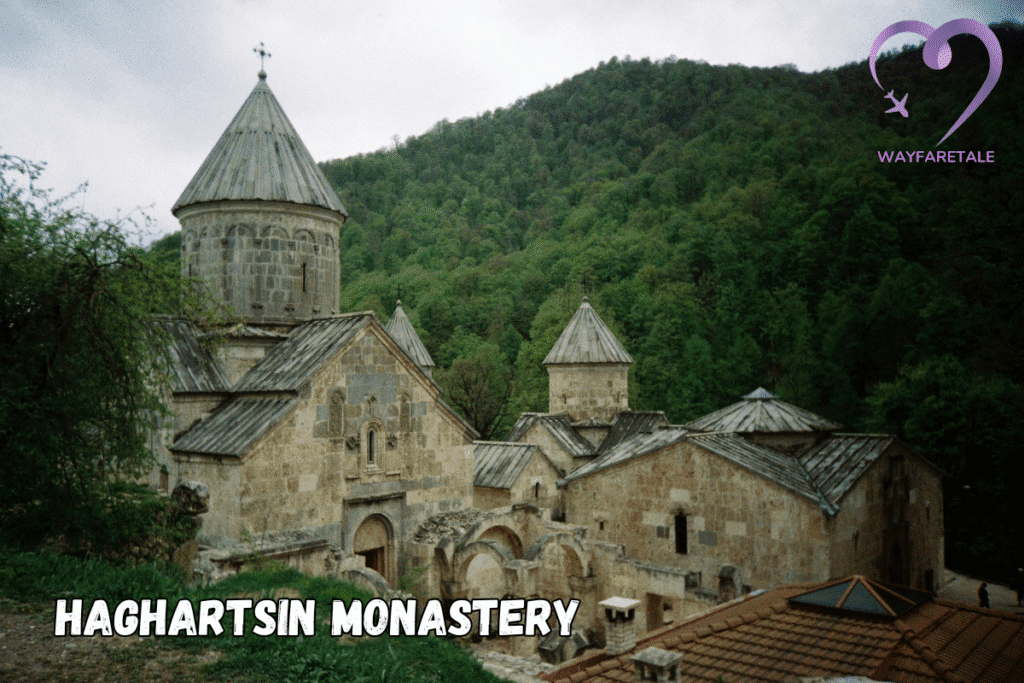
HAGHARTSIN MONASTERY
Hidden Forest Monastery
Just 18 km from Dilijan, Haghartsin Monastery sits hidden in a forested valley within Dilijan National Park. The drive follows a winding forest road with the monastery appearing suddenly, nestled among tall trees with mountains rising behind – the setting is enchanting.
Built between the 10th and 13th centuries, Haghartsin served as a major religious center with a monastery school. The complex consists of three churches and a remarkably well-preserved refectory. What makes Haghartsin special is its forest setting – unlike most Armenian monasteries perched on dramatic cliffs, this one feels intimate and peaceful among the trees.
What to See at Haghartsin:
The Refectory The two-story refectory building, completed in 1248, is architecturally unique with its stunning vaulted ceiling supported by two columns. The stone carving details are exquisite.
The Three Churches The main church, St. Astvatsatsin (Holy Mother of God), dominates the complex with beautiful proportions. The two smaller churches are also worth exploring for their khachkars and stone carvings.
Forest Walks Several hiking trails lead from the monastery deeper into Dilijan National Park. Even a short 20-minute walk on the forest paths offers a peaceful experience among beech and oak trees.
USEFUL TIP: Visit Haghartsin in the morning when sunlight filters through the trees and illuminates the monastery stones. The entrance is free. There’s a decent restaurant near the parking area serving traditional food.
I spent about 90 minutes at Haghartsin, exploring the churches and walking the forest trails. The peaceful atmosphere and beautiful natural setting made it one of my favorite monasteries in Armenia.
GOSHAVANK MONASTERY
A Masterpiece of Medieval Armenian Architecture
From Haghartsin, I drove 30 km northeast to Goshavank Monastery, another forest monastery but with a completely different character. Located near the village of Gosh, this 12th-century monastery complex is renowned for having some of the finest khachkars (cross-stones) in all of Armenia.
Goshavank was founded in 1188 by the scholar Mkhitar Gosh (Armenia’s equivalent of Aristotle), who established an important academy here. The monastery became a major center of learning, producing illuminated manuscripts and training scholars.
Highlights of Goshavank:
The Church of St. Astvatsatsin The main church features beautiful architecture with intricate stone carvings. The gavit (entrance hall) showcases remarkable acoustics – try clapping to hear the echo.
The World’s Finest Khachkars Goshavank houses several extraordinarily detailed khachkars created by master craftsman Poghos. The most famous, located near the entrance, displays incredibly intricate lacework-style carving – it’s hard to believe this was carved from solid stone. Spend time examining the details; the craftsmanship is breathtaking.
The Library and School Buildings The monastery complex includes remains of the medieval library and school buildings where students studied theology, philosophy, mathematics, and law.
Village Atmosphere Unlike more touristy monasteries, Goshavank retains an authentic village atmosphere. Local women sell homemade preserves, dried fruits, and handicrafts near the entrance. I bought some delicious walnut preserves and berry jam.
PHOTOGRAPHY TIP: The best light for photographing the khachkars is late morning to early afternoon when the sun illuminates the intricate carvings without harsh shadows.
Goshavank receives far fewer visitors than major sites like Geghard, making the experience more intimate. I had the monastery almost to myself for an hour on a weekday.
DILIJAN NATIONAL PARK
Hiking in Armenia’s Greenest Region
After visiting the monasteries, I returned to Dilijan for an afternoon hike in Dilijan National Park. The park encompasses over 240 square kilometers of forested mountains, home to rare plant species, wildlife, and pristine alpine landscapes.
Parz Lake (Lake Parz)
I drove to Parz Lake, a small but beautiful forest lake just 15 km from Dilijan. “Parz” means “clear” in Armenian, and the lake lives up to its name with remarkably transparent water reflecting the surrounding forest.
The lake has well-maintained walking trails circling the shore, making for an easy, pleasant hour-long hike. You can also rent paddle boats or zip-line across the lake if you’re feeling adventurous. I simply walked the trail, enjoying the peaceful forest atmosphere and the lake’s mirror-like reflections.
There’s a cafe by the lake serving coffee and snacks – I sat on the terrace enjoying Armenian coffee while watching ducks glide across the water. It was a perfect, relaxing afternoon after days of monastery-hopping.
Other Hiking Options in Dilijan:
Dilijan National Park offers numerous hiking trails ranging from easy forest walks to challenging mountain treks:
- Jukhtak Vank Trail: 10 km moderate hike to medieval monastery ruins
- Matosavank Monastery Trail: 7 km hike through forest to a remote monastery
- Mount Haykatar: Challenging summit hike with panoramic views
HIKING TIP: Pick up a trail map from your hotel or the park visitor center in Dilijan. The trails are generally well-marked but carrying a map is always wise. Wear proper hiking shoes as trails can be muddy, especially in spring.
Evening in Dilijan
Returning to Dilijan in the late afternoon, I spent the evening exploring more of the town. I visited the Dilijan Museum, which houses an excellent collection of Armenian art, traditional costumes, and ethnographic exhibits showcasing local culture.
Later, I wandered through Sharambeyan Street again, stopping at different craft workshops to watch artisans creating traditional Armenian pottery, woodwork, and jewelry. The street has a wonderful community atmosphere with locals and tourists mingling in the cafes.
For dinner, I tried Kchuch restaurant, famous for its traditional Armenian dishes served in clay pots. The lamb kchuch (stew) was hearty and delicious, perfect after a day of hiking.
Optional: Armenian Wine Tasting
If you’re interested in Armenian wine, Dilijan has several wine bars offering tastings of local Armenian wines. Armenia has a 6,000-year winemaking history, and while not as famous as Georgian wine, Armenian wines are gaining recognition.
I visited Tufenkian Old Dilijan Complex wine cellar for a tasting session. The sommelier explained Armenia’s ancient winemaking traditions while I sampled wines from the Areni grape (Armenia’s signature variety). The wines were excellent, and I purchased a bottle to enjoy back at my guesthouse.
Day 6: Debed Canyon – Haghpat, Sanahin, and Alaverdi
- Distance covered: 180 KM
- Total drive time: 3 HRS 30 MIN
- Overnight in: Alaverdi or return to Yerevan (4 HRS drive)
Day six takes you to Armenia’s far north, exploring the spectacular Debed Canyon and two of the country’s most historically significant UNESCO World Heritage monasteries.
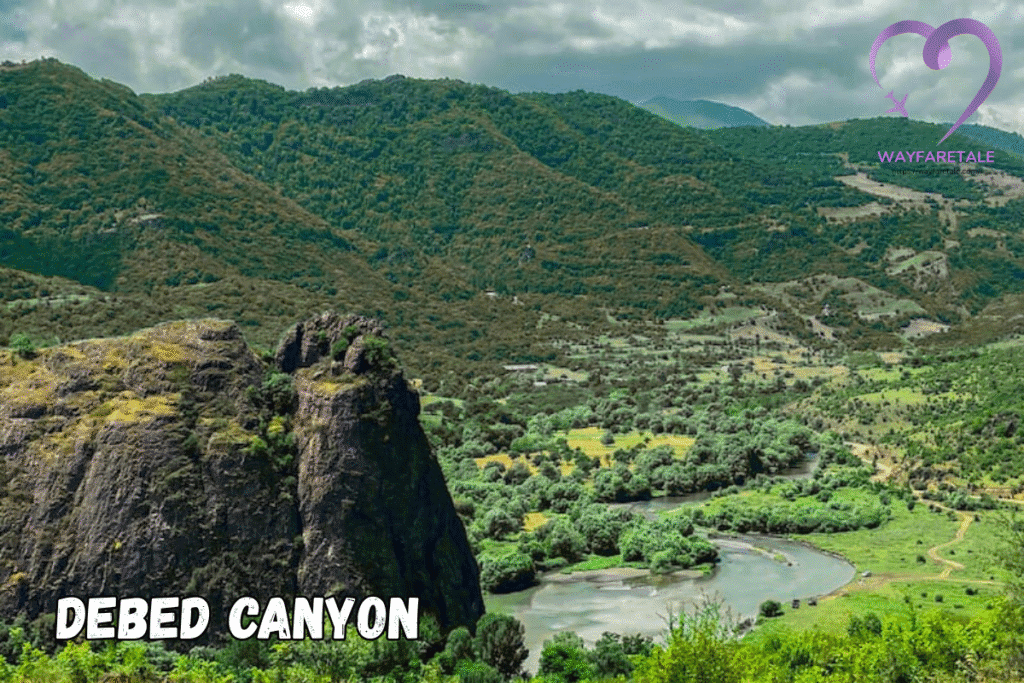
DEBED CANYON
Drive One of Armenia’s Most Dramatic Gorges
The drive from Dilijan to Debed Canyon follows winding mountain roads through increasingly wild landscapes. The journey takes about 2 hours, passing through small villages and dense forests before descending into the dramatic Debed River gorge.
Debed Canyon is one of Armenia’s most impressive natural formations – a deep river valley flanked by towering mountains, with medieval monasteries perched on the slopes and old Soviet-era infrastructure creating an interesting juxtaposition of ancient and modern.
The main highway (M6) follows the canyon floor, passing through industrial towns that were mining centers during Soviet times. While not conventionally beautiful, the canyon has a raw, authentic character that’s fascinating to experience.
HAGHPAT MONASTERY
UNESCO World Heritage Masterpiece
Haghpat Monastery, founded in 976 AD, sits on a plateau overlooking the Debed Canyon with stunning mountain views in every direction. This monastery complex represents the pinnacle of medieval Armenian ecclesiastical architecture and was a major center of learning in the 10th-13th centuries.
Haghpat is less visited than monasteries near Yerevan, meaning you’ll likely have a more authentic, contemplative experience. When I arrived on a weekday morning, only a handful of other visitors were there, and I could explore the complex peacefully.
What to Explore at Haghpat:
The Main Cathedral of Surb Nshan (Holy Cross) Built in 991-1029, this cathedral showcases perfect proportions and beautiful stone carving. The interior features remarkable frescoes that have survived centuries. Take time to appreciate the architectural details – the craftsmanship is extraordinary.
The Magnificent Khachkars Haghpat houses several stunning khachkars, including the famous “Savior’s Khachkar” from 1273, considered one of the finest in Armenia. The intricate lace-like stone carving demonstrates master-level artistry.
The Library and Bell Tower The monastery’s library, built in 1262, once housed thousands of manuscripts. The separate bell tower, standing tall against the mountain backdrop, is extremely photogenic.
The Refectory The massive refectory building showcases medieval engineering with its vaulted ceiling and perfect acoustics. Stand in the center and speak – the echo effect is remarkable.
PHOTOGRAPHY TIP: Visit Haghpat in morning or late afternoon for the best light. The monastery stones glow golden in soft light, and the mountain backdrop is most dramatic when not harshly lit.
USEFUL TIP: Entrance to Haghpat is free. There’s a small shop selling local honey and handicrafts near the entrance. The monastery can be reached by a short uphill walk from the parking area – the path is well-maintained but wear comfortable shoes.
I spent nearly 2 hours at Haghpat, exploring every corner of the complex and simply sitting in the courtyard absorbing the peaceful atmosphere and spectacular views.
SANAHIN MONASTERY
Haghpat’s Sister Monastery
Just 3 km from Haghpat, across the Debed Canyon, sits Sanahin Monastery – Haghpat’s sister complex and another UNESCO World Heritage Site. Founded around the same time (966 AD), Sanahin was also a renowned center of learning and manuscript production.
The name “Sanahin” means “this one is older than that one,” supposedly referring to its founding slightly before Haghpat, though this sparked rivalry between the two monasteries for centuries.
Highlights of Sanahin:
The Church of Surb Astvatsatsin The main church, built in 934, is slightly simpler than Haghpat’s but equally beautiful. The carved details around the entrance are exquisite.
The Academy of Sanahin This was one of medieval Armenia’s most important educational institutions, where students studied theology, philosophy, medicine, and mathematics. The building showcases unique architectural features including its astronomical observatory.
The Library Building Built in 1063, this two-story structure once housed an extensive manuscript collection. Today, you can explore the rooms and imagine the scholarly activities that took place here centuries ago.
The Courtyard Complex Wandering through Sanahin’s interconnected courtyards, chapels, and auxiliary buildings feels like discovering a medieval city. The complex is more extensive than it first appears.
INSIDER TIP: Sanahin village itself is worth exploring. Local families sell homemade preserves, dried fruits, and handicrafts around the monastery entrance. The village has retained its authentic character with traditional stone houses and narrow streets.
The entrance to Sanahin is also free. I recommend visiting both Haghpat and Sanahin in the same day as they’re so close and offer different perspectives on medieval Armenian monastic life.
ALAVERDI
Exploring Armenia’s Copper Mining Town
Between Haghpat and Sanahin sits Alaverdi, a Soviet-era industrial town built around copper mining and processing. While not traditionally beautiful, Alaverdi offers a fascinating glimpse into Armenia’s Soviet past and present-day industrial reality.
The massive copper smelter dominates the landscape, and Soviet-era apartment blocks climb the canyon walls. It’s a stark contrast to the ancient monasteries above, but this juxtaposition tells the complete story of Armenia – ancient history coexisting with modern challenges.
If you have time, the Mikoyan Brothers Museum in Alaverdi is worth a quick visit. It honors two famous sons of Alaverdi: Anastas Mikoyan (a prominent Soviet politician) and Artem Mikoyan (aircraft designer who created the MiG fighter jets).
DINING RECOMMENDATION: Try Tufenkian Avan Dzoraget Hotel Restaurant near Alaverdi for lunch with spectacular canyon views. The hotel restaurant serves excellent Armenian cuisine in a beautiful setting overlooking the Debed River.
Where to Stay in Debed Canyon?
For those wanting to spend more time exploring the region, staying overnight in Debed Canyon is recommended. I stayed at Tufenkian Avan Dzoraget Hotel, a beautifully restored caravanserai-turned-hotel with stunning views over the canyon. The hotel’s terrace restaurant is perfect for watching sunset over the mountains.
Alternatively, there are several guesthouses in the villages near the monasteries offering budget-friendly accommodation with authentic local experiences.
However, if you’re short on time, you can visit both monasteries as a day trip and return to Yerevan (about 3.5-4 hours drive) or continue to your next destination.
Book your stay in Debed Canyon through Booking.com
Day 7: Return to Yerevan via Amberd Fortress and Mount Aragats
- Distance covered: 200 KM
- Total drive time: 3 HRS 30 MIN
- Overnight in: Yerevan (final night)
On the final day of my Armenia road trip, instead of taking the direct route back to Yerevan, I made a scenic detour through the Aragatsotn Province to visit Amberd Fortress and explore the slopes of Mount Aragats, Armenia’s highest peak.
MOUNT ARAGATS REGION
Armenia’s Highest Mountain
Mount Aragats, at 4,090 meters, is Armenia’s highest peak and a dormant volcano with four distinct summits surrounding a crater lake. The mountain dominates the landscape of central Armenia and offers excellent hiking opportunities in summer.
The drive toward Aragats takes you through changing landscapes – from Debed’s green gorges to increasingly alpine terrain with volcanic rock formations and high-altitude meadows dotted with wildflowers in summer.
AMBERD FORTRESS
Medieval Fortress on the Slopes of Aragats
Perched at 2,300 meters on the slopes of Mount Aragats, Amberd Fortress is one of Armenia’s best-preserved medieval fortresses. Built in the 7th century and expanded in the 10th-13th centuries, Amberd served as a strategic military stronghold for the Armenian princes.
The drive up to Amberd is an adventure itself – a winding mountain road offering increasingly spectacular views as you climb. The last section is quite rough, so drive carefully.
What to See at Amberd:
The Fortress Walls and Tower The imposing fortress walls, built from massive basalt blocks, still stand strong after centuries. You can walk along sections of the walls and climb to the tower for panoramic views across the valley toward Mount Ararat in the distance.
The Church of Vahramashen This small 11th-century church inside the fortress walls showcases beautiful Armenian ecclesiastical architecture with intricate stone carvings.
The Bathhouse The remarkably well-preserved medieval bathhouse demonstrates the sophisticated engineering of Armenian builders, with its heating system and water channels still visible.
The Views The location itself is the main attraction. Standing at Amberd with Mount Aragats rising behind you and endless mountain ranges stretching to the horizon creates an overwhelming sense of history and natural grandeur.
USEFUL TIP: Amberd is only accessible from May to October due to heavy snow in winter. The site can be very windy and cold even in summer, so bring a warm jacket. Entrance fee is around 1,000 AMD ($2.50).
HIKING OPTION: For adventurous travelers, several hiking trails lead from Amberd higher up Mount Aragats. The hike to Lake Kari (3,190m) takes about 2-3 hours and offers stunning alpine scenery.
I spent about 90 minutes exploring Amberd, walking the fortress walls, and simply absorbing the incredible mountain atmosphere. The solitude and raw beauty of this place made it a perfect final stop before returning to Yerevan.
ALPHABET MONUMENT
A Unique Tribute to Armenian Letters
On the way down from Aragats toward Yerevan, I made a quick stop at the Armenian Alphabet Monument near the village of Artashavan. This quirky roadside attraction features 39 carved stone letters representing the Armenian alphabet, created by Mesrop Mashtots in 405 AD.
Each letter stands about 2 meters tall, and visitors love taking photos with the letters of their names. It’s a fun, lighthearted stop that celebrates Armenian culture and makes for unique photo opportunities.
The monument is free to visit, and there’s a small gift shop selling Armenian crafts and souvenirs.
RETURN TO YEREVAN
From the Alphabet Monument, it’s about an hour’s drive back to Yerevan. I arrived in the capital in the late afternoon, returned my rental car to the agency near the airport, and checked back into accommodation in the city center.
Final Evening in Yerevan
For my last evening in Armenia, I returned to some of my favorite spots in Yerevan. I climbed the Cascade one final time for sunset views of Mount Ararat, had dinner at a traditional restaurant trying dishes I hadn’t yet sampled, and spent the evening walking through Republic Square one last time, watching the fountain show and reflecting on an incredible week of travel.
FINAL DINNER RECOMMENDATION: For a special last meal, try Dolmama Restaurant near Republic Square. This upscale restaurant serves creative interpretations of traditional Armenian dishes in an elegant setting. It’s more expensive than typical restaurants but perfect for a celebratory final dinner.
What I Skipped and What I Would Suggest Skipping
Not everything in Armenia needs to be on your itinerary. Here are places I skipped or would recommend skipping unless you have extra time:
Places I Skipped:
Gyumri Armenia’s second-largest city was heavily damaged in the 1988 earthquake and, while rebuilding, still bears visible scars. Many travelers skip it unless specifically interested in Soviet architecture or earthquake history. However, if you have extra time, Gyumri’s old town has charm and the city has a thriving arts scene.
Jermuk This spa resort town is famous for its mineral waters and waterfall. While beautiful, it’s out of the way and similar experiences can be had elsewhere. Only visit if you specifically want a spa retreat or have 10+ days in Armenia.
Areni Wine Region Although Armenia has ancient winemaking traditions, I skipped the Areni wine caves this trip due to time constraints. If you’re a wine enthusiast, it’s worth visiting, but casual travelers might prefer spending time at monasteries.
Stepanakert (Nagorno-Karabakh) Due to the complex political situation and ongoing conflict, travel to this region is not currently recommended for safety reasons.
What Could Be Skipped:
Geghard vs. Other Cave Monasteries If you’re short on time, Geghard alone is sufficient – you don’t need to visit every cave monastery in Armenia. Geghard is the most impressive and accessible.
Too Many Monasteries While Armenian monasteries are beautiful, they can start feeling repetitive. Choose 5-6 favorites rather than trying to see every single one. Focus on UNESCO sites like Geghard, Haghpat, Sanahin, and Tatev.
Sevan Town The town itself is quite touristy and unattractive. Visit Sevanavank Monastery and the lake, but don’t feel obligated to explore Sevan town unless you need services.
Additional Armenia Travel Tips
Money and Costs
- Currency is Armenian Dram (AMD). ATMs widely available in cities, less common in rural areas
- Credit cards accepted in Yerevan and tourist areas, but carry cash for rural regions
- Tipping: 10% in restaurants is appreciated but not mandatory
Language
- Armenian is the official language, written in its unique alphabet
- Russian is widely spoken, especially among older generations
- English is increasingly common in Yerevan and tourist areas
- Learn a few Armenian phrases – locals greatly appreciate the effort
SIM Cards and Internet
- Purchase a local SIM card at the airport (Beeline, Viva Cell-MTS, or Ucom)
- 4G coverage is good in cities and along major roads
- WiFi available in most hotels and cafes
Safety
- Armenia is very safe for travelers, including solo female travelers
- Petty crime is rare; violent crime against tourists is virtually unknown
- Be cautious near the Azerbaijan border areas due to occasional tensions
- Roads can be dangerous due to aggressive driving – drive defensively
Cultural Tips
- Armenians are incredibly hospitable – don’t be surprised by invitations to homes
- Dress modestly when visiting monasteries (covered shoulders and knees)
- Photography is generally allowed at monasteries, but ask permission before photographing people
- Refusing food or drink offers can be seen as rude – at least try a small amount
Best Time to Visit Armenia – Detailed Breakdown
Spring (April-June):
- My favorite season for Armenia
- Wildflowers bloom across mountains
- Perfect temperatures (15-25°C)
- All roads are open after winter
- Fewer tourists than summer
Summer (July-August):
- Hot in Yerevan (30-40°C) but perfect in mountains
- Peak tourist season – book accommodations in advance
- Best time for high-altitude hiking
- Lake Sevan is warm enough for swimming
- Some rural roads can be dusty
Autumn (September-October):
- Excellent season with golden foliage
- Grape harvest season – wine festivals
- Pleasant temperatures
- Fewer tourists than summer
- Great for photography with autumn colors
Winter (November-March):
- Cold with snow in mountains
- Many mountain roads closed
- Yerevan remains accessible and less touristy
- Good for winter sports enthusiasts
- Lower accommodation prices
- Not ideal for road trips
Essential Packing List for Armenia Road Trip
- Documents: Passport, driver’s license, car rental papers, insurance documents
- Clothing: Layers (temperature varies greatly by altitude), warm jacket even in summer, comfortable walking shoes, sandals, modest clothing for monasteries
- Tech: Phone charger, car charger, power bank, camera with extra batteries, universal adapter
- Health: Basic first aid kit, any prescription medications, sunscreen, insect repellent
- Extras: Reusable water bottle, snacks for long drives, flashlight, binoculars for mountain viewing
More Armenia Travel Guides
I hope you found this Armenia road trip itinerary useful! Below are some additional resources and guides:
- 25 Essential Tips for Traveling in Armenia
- Complete Guide to Armenian Monasteries
- Best Hiking Trails in Armenia
- Armenian Food Guide: 20 Dishes You Must Try
- Planning to rent a car in Armenia? Read Everything You Need to Know About Driving in Armenia
YOU MAY ALSO LIKE: Exploring Georgia – a comprehensive guide to Armenia’s northern neighbor with similar stunning mountain landscapes and ancient culture.
Armenia Travel Resources
Planning your trip to Armenia soon? Below are useful links to travel booking resources that I personally use:
Flights
- Find the BEST FLIGHTS within your budget using KIWI.com – offers the best routes and flight deals with money-back guarantee if you miss connections
- Skyscanner is another excellent option for comparing flight prices
Car Rental
- Rent your car at the BEST RATE with Localrent – provides competitive prices from local Armenian suppliers
- Discovercars – car search aggregator I frequently use for European and Caucasus trips, often saving up to 70% compared to direct bookings
Accommodation
- Find your PERFECT ACCOMMODATION in Armenia on:
- Booking.com – my go-to site with excellent selection and Genius discounts
- Expedia – good alternative with package deals
- Airbnb – excellent for experiencing Armenian hospitality in private homes
Travel Insurance
- Always get TRAVEL INSURANCE for peace of mind
- SafetyWing offers the most affordable rates for long-term travelers
- Heymondo provides comprehensive coverage including adventure activities
Tours and Activities
- Book the best-rated GUIDED TOURS in Armenia on:
- GetYourGuide – excellent selection of day tours from Yerevan
- Viator – comprehensive tour options across Armenia
- Manawa – best for outdoor and adventure activities
Useful Websites
- Armenia Tourism (armenia.travel) – official tourism website with practical information
- Yerevan Guide – comprehensive city guide with restaurant and nightlife recommendations
- ArmeniaGeo – excellent resource for hiking trails and nature activities
Final Thoughts on My Armenia Road Trip
Armenia exceeded every expectation I had. This ancient land offers an incredible combination of dramatic natural beauty, profound historical significance, warm hospitality, and delicious cuisine – all accessible within a compact geography perfect for a one-week road trip.
Driving through Armenia allowed me to experience the country’s diversity – from the cosmopolitan energy of Yerevan to remote mountain monasteries where time seems to have stopped, from the turquoise waters of Lake Sevan to the dramatic gorges of Debed Canyon. Each day brought new discoveries and unforgettable moments.
What struck me most was the warmth of Armenian people. Whether sharing coffee with a monastery caretaker, receiving directions from a local villager, or being invited for homemade cognac by a guesthouse owner, I felt welcomed and valued everywhere I went.
The freedom of having a rental car was essential – many of Armenia’s most beautiful places aren’t accessible by public transport, and the journey between destinations is often as spectacular as the destinations themselves. Those winding mountain roads, dramatic vistas appearing around each bend, and the ability to stop whenever something caught my eye made the road trip format perfect for Armenia.
If you’re considering a road trip in the Caucasus region, Armenia should be at the top of your list. It’s safer, easier to navigate, and more affordable than many European destinations, while offering experiences that are genuinely unique and deeply meaningful.
This one-week itinerary covered the highlights, but I’m already planning my return to explore the regions I missed and to revisit favorite places. Armenia is the kind of destination that stays with you long after you leave, calling you back to discover more.
Safe travels, and may your Armenia road trip be as memorable as mine!
Have you been to Armenia or are you planning a road trip there? Share your experiences or questions in the comments below – I’d love to hear from you!