
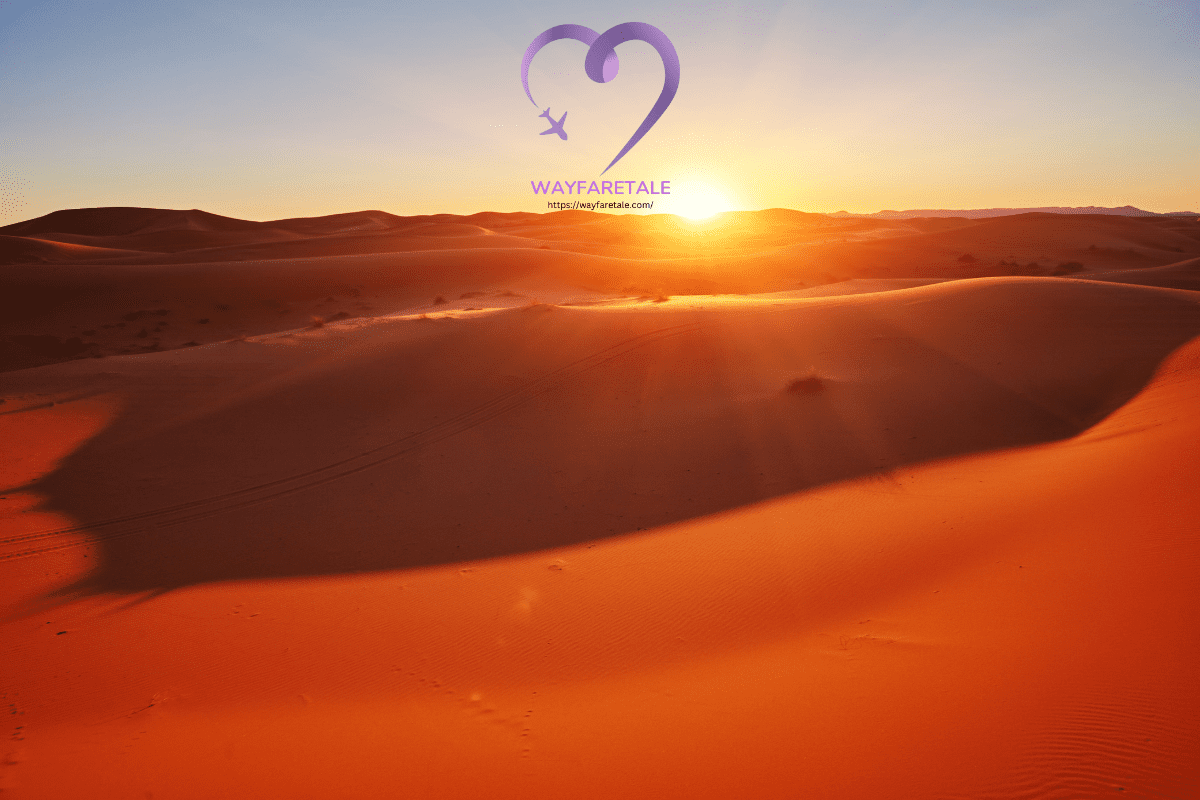
Morocco Road Trip: Epic One-Week Travel Itinerary for the Imperial Kingdom!
Morocco is an extraordinary destination for an African road trip adventure. This comprehensive one-week Morocco road trip itinerary covers the essential highlights of this captivating North African kingdom that you can explore in 7 unforgettable days.
Morocco is a diverse country with an incredible array of experiences packed into a relatively compact area! Scenic highways wind through bustling imperial cities, golden Sahara dunes, dramatic Atlas Mountains, and charming coastal towns. Therefore, embarking on a Morocco road trip is undoubtedly the best way to discover this mesmerizing land of contrasts.
With your own vehicle, you’ll have the freedom to explore Morocco’s most remarkable destinations at your own pace. While some attractions can be reached through organized tours or public transport, many of the most spectacular and authentic experiences are only accessible by car – from hidden kasbahs in remote valleys to breathtaking mountain passes and secluded desert camps.
Based on my extensive travels through this enchanting kingdom, I’ve crafted this detailed 7-day Morocco road trip itinerary that encompasses the imperial cities, the majestic Sahara Desert, the towering Atlas Mountains, and charming coastal gems. This guide includes driving distances, provides practical tips, and suggests carefully selected accommodations throughout Morocco.
Essential Travel Planning Tips
Car Rental Recommendations:
- Enterprise Morocco is an excellent choice offering reliable vehicles and competitive rates specifically for Morocco. They have locations in major cities and airports with comprehensive insurance options.
- For budget-conscious travelers, check Kayak or Rentalcars.com for comparing rates between different rental companies, potentially saving up to 60% on your rental costs.
Accommodation: I booked all my stays through Booking.com and local riads for authentic experiences.
Travel Insurance: Secure comprehensive travel insurance through World Nomads or SafetyWing for peace of mind.
Tours & Activities: Discover incredible desert excursions and cultural tours on Viator and GetYourGuide.
Summary of My Morocco Road Trip Route
- Day 1: Casablanca arrival – Hassan II Mosque – Drive to Rabat
- Day 2: Rabat exploration – Chefchaouen (The Blue Pearl)
- Day 3: Chefchaouen – Fez via Volubilis Roman ruins
- Day 4: Fez medina exploration – Drive to Merzouga (Sahara Desert)
- Day 5: Sahara Desert experience – Erfoud – Todra Gorge
- Day 6: Todra Gorge – Ait Ben Haddou – Marrakech
- Day 7: Marrakech highlights – Departure
If I had 5 Days in Morocco: Casablanca – Fez – Sahara Desert – Ait Ben Haddou – Marrakech
If I had 10 Days in Morocco: Add Essaouira coastal town, extended Atlas Mountains exploration, and more time in each imperial city.
Morocco Road Trip Planning Essentials

Renting a Car in Morocco
Major international car rental companies operate from Mohammed V Airport in Casablanca and other key airports. I recommend checking comparison sites like Kayak or booking directly with established companies like Enterprise or Europcar. Ensure you have an International Driving Permit, which is mandatory for driving in Morocco.
Driving in Morocco
Driving offers unparalleled flexibility to explore Morocco’s diverse landscapes. The country’s road network is generally well-maintained, especially major highways connecting cities. However, prepare for varying road conditions – from excellent highways to winding mountain roads that require careful navigation.
Morocco’s roads can be narrow in rural areas and mountain regions, making travel times longer than expected. For instance, what appears to be a 100km journey might take 2-3 hours due to winding roads and occasional livestock crossings. The infrastructure has improved significantly in recent years, with new highways connecting major destinations.
Traffic in cities like Marrakech and Fez can be intense, with motorbikes, donkey carts, and pedestrians sharing the road. Rural driving is generally more peaceful, though you should remain alert for unexpected obstacles.
Accommodation Strategy
Throughout my Morocco road trip, I prioritized staying in traditional riads and locally-owned accommodations rather than international hotel chains. This approach provides authentic cultural immersion, especially when staying multiple consecutive nights, offering opportunities to experience genuine Moroccan hospitality, traditional cuisine, and architectural beauty.
When booking accommodation with a rental car, parking availability becomes crucial. Each property I selected offered either private parking or secure nearby parking arrangements – essential in Morocco’s bustling medinas.
Booking Platform: I consistently use Booking.com for its extensive selection of riads, hotels, and guesthouses across all budgets. The platform’s flexible cancellation policies and customer reviews prove invaluable for decision-making.
Pro Tip: Always verify cancellation policies and choose accommodations with flexible terms when possible. I typically book properties with free cancellation up to 24-48 hours before arrival to maintain flexibility for itinerary changes.
Accommodation Highlights Summary
Here’s a preview of the exceptional accommodations I experienced during my Morocco road trip:
- Rabat – Riad Kalaa – Historic riad in the medina (2 nights)
- Chefchaouen – Casa Perleta – Traditional blue house with mountain views (1 night)
- Fez – Riad Rcif – Authentic medina experience (1 night)
- Merzouga (Sahara) – Desert Luxury Camp – Traditional Berber camp experience (1 night)
- Marrakech – Riad Yasmine – Beautiful courtyard riad in Medina (2 nights)
All properties were booked through Booking.com with detailed reviews available on the platform. I’ll provide comprehensive details about each accommodation in the day-by-day sections below.
What to Expect in Morocco
Morocco offers an intoxicating blend of experiences that will engage all your senses. You’ll navigate the labyrinthine souks of ancient medinas, where the aroma of tagines and mint tea fills the air. Marvel at architectural masterpieces like the Hassan II Mosque in Casablanca and the intricate mosaics of Fez’s madrasas.
The country’s natural diversity is equally stunning – from the rolling dunes of the Sahara Desert where you’ll witness unforgettable sunrises, to the snow-capped peaks of the High Atlas Mountains, and the dramatic gorges carved by ancient rivers. You’ll experience the warmth of Berber hospitality in mountain villages, bargain for treasures in bustling markets, and taste the incredible fusion of Arab, Berber, and French culinary traditions.
Morocco’s cultural richness extends beyond its famous imperial cities. You’ll encounter nomadic traditions in the desert, discover Roman ruins at Volubilis, and witness traditional crafts being practiced as they have been for centuries – from carpet weaving in the Atlas to pottery in Safi.
How Many Days Do You Need in Morocco?
Based on my multiple visits to this incredible kingdom, one week provides an excellent introduction to Morocco’s highlights, allowing you to experience the imperial cities, desert, and mountains. However, two weeks would give you time to explore more remote regions and truly immerse yourself in local culture.
This itinerary focuses on the absolute must-see destinations for first-time visitors. I also mention places that could be skipped if time is limited, and additional destinations worth considering for longer trips.
Note: If you fly into Marrakech instead of Casablanca, you can easily reverse this itinerary. The same applies to travelers arriving overland from Spain via ferry or from neighboring North African countries.
When to Visit Morocco
The shoulder seasons of March-May and September-November offer the best weather conditions for a Morocco road trip. During these periods, temperatures are pleasant for both city exploration and desert activities. Summer (June-August) can be extremely hot, especially in the desert regions and inland cities, though coastal areas remain more comfortable.
Winter (December-February) brings cooler temperatures and occasional rain, but it’s still an excellent time to visit, particularly for those wanting to avoid crowds. The Atlas Mountains may have snow during winter months, which can affect some mountain passes.
Budget for Your Morocco Road Trip
Morocco offers exceptional value compared to European destinations, though prices have increased in recent years. Here’s a realistic budget breakdown for essential expenses:
- Accommodation: $30-$80/night for authentic riads and quality hotels
- Dining: $15-$35/day depending on restaurant choices (street food vs. upscale dining)
- Car Rental: $25-$50/day for advance bookings, depending on season and vehicle type
- Fuel: $1.10-$1.30/liter for gasoline (2024 prices)
- Activities: Desert tours $50-$150/person, monument entries $2-$8
Morocco 7-Day Road Trip Itinerary Day by Day
For those wanting to experience the essence of Morocco’s diverse beauty, here’s my detailed day-by-day breakdown of the route I perfected over multiple visits to this captivating kingdom.
Day 1: Casablanca Arrival and Hassan II Mosque – Drive to Rabat
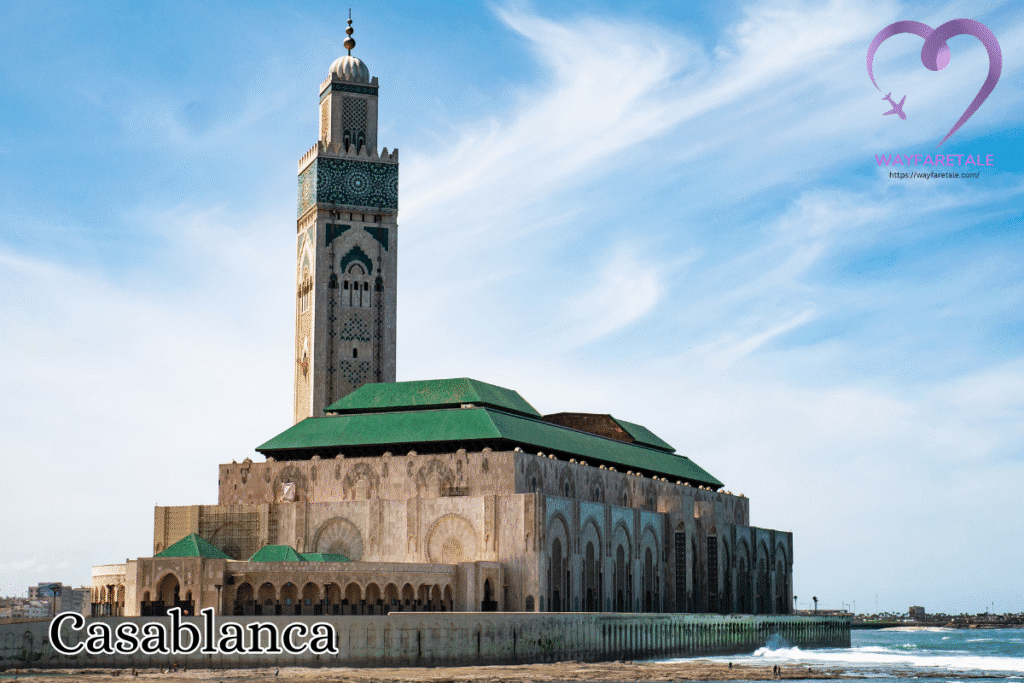
Distance covered: 95 KM
Total drive time: 1 HR 15 MIN
Overnight in: Rabat for 2 consecutive nights
Landing at Mohammed V Airport in Casablanca, the economic capital of Morocco, provides the perfect introduction to this modern North African nation. While Casablanca might not have the medieval charm of Fez or the desert allure of Merzouga, it offers fascinating insights into contemporary Morocco.
HASSAN II MOSQUE
The magnificent Hassan II Mosque stands as one of the world’s architectural masterpieces and Morocco’s most impressive religious monument. This stunning mosque, completed in 1993, features the world’s tallest minaret at 210 meters and can accommodate 105,000 worshippers.
Things to do at Hassan II Mosque:
- Take a guided interior tour – One of the few mosques in Morocco open to non-Muslims, the interior reveals breathtaking craftsmanship including intricate mosaics, carved cedar ceilings, and marble columns.
- Admire the oceanfront location – The mosque is dramatically positioned on a promontory overlooking the Atlantic Ocean, with waves sometimes splashing against its base.
- Photography at sunset – The golden hour provides magical lighting for capturing this architectural wonder against the ocean backdrop.
USEFUL TIP: Tours run several times daily (except Friday mornings during prayers) and cost around 120 MAD ($12). Book in advance during peak season. The mosque is easily accessible by taxi from the airport – a perfect first stop before heading to Rabat.
Drive to Rabat
The drive from Casablanca to Rabat follows an excellent highway along the Atlantic coast. This journey offers your first taste of Moroccan landscapes – rolling hills, eucalyptus forests, and glimpses of the ocean. Traffic can be heavy leaving Casablanca, so allow extra time if traveling during rush hours.
Day 2: Rabat Exploration – The Capital’s Hidden Gems
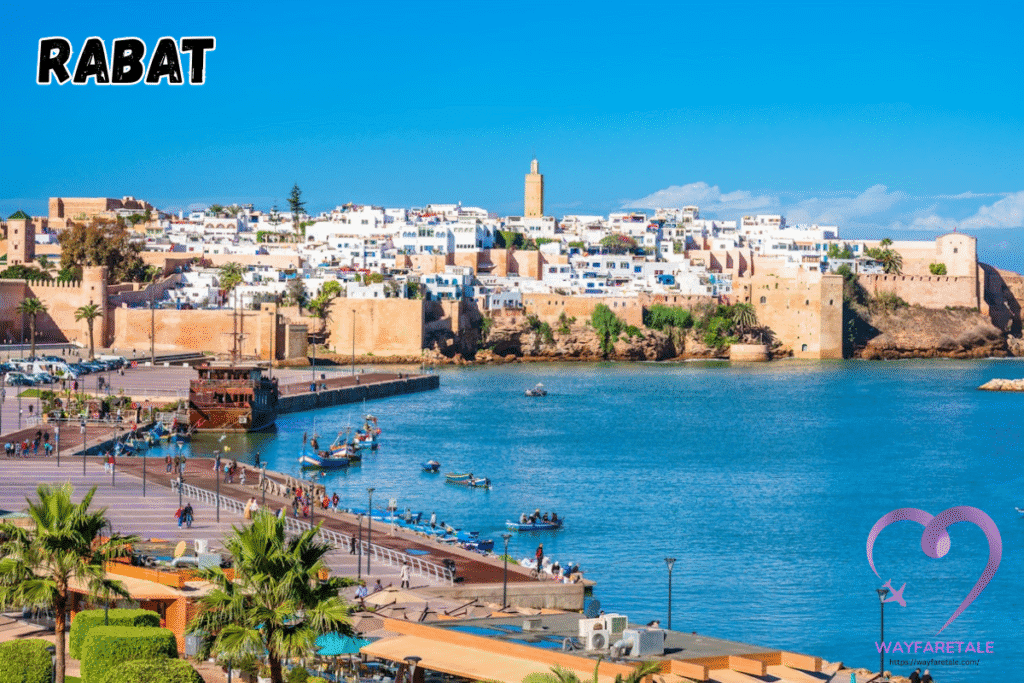
Distance covered: 25 KM (local exploration)
Total drive time: City driving
Overnight in: Rabat
Morocco’s political capital often gets overlooked in favor of more famous imperial cities, but Rabat offers a perfect blend of historical significance and modern Moroccan life. As a UNESCO World Heritage site, the city provides excellent introduction to Moroccan culture without the overwhelming intensity of larger medinas.
KASBAH OF THE UDAYAS
This 12th-century fortress provides stunning views over the Atlantic Ocean and Bou Regreg River. The kasbah’s blue and white painted streets create a tranquil atmosphere perfect for morning exploration.
Things to do in Kasbah of the Udayas:
- Explore the Andalusian Gardens – These peaceful gardens offer respite from city heat with fragrant orange trees, flowing fountains, and traditional Islamic geometric designs.
- Visit the Museum of Oudaya – Housed in a 17th-century palace, this museum showcases traditional Moroccan arts and crafts.
- Walk to the Udaya viewpoint – Spectacular panoramic views of the Atlantic Ocean and Salé across the river make this one of Morocco’s most photogenic spots.
USEFUL TIP: Visit early morning (8-9 AM) to avoid crowds and enjoy the best light for photography. The kasbah’s narrow streets can become congested later in the day.
RABAT MEDINA
Unlike the labyrinthine medinas of Fez or Marrakech, Rabat’s medina is compact and manageable, making it perfect for first-time visitors to Morocco.
- Browse Rue Souk es Ghezel – The main shopping street offers traditional crafts, carpets, and leather goods without aggressive selling pressure found in larger medinas.
- Visit local hammams – Experience traditional Moroccan bathing culture at one of the authentic neighborhood hammams.
HASSAN TOWER AND MAUSOLEUM OF MOHAMMED V
These adjacent monuments represent Morocco’s royal heritage and architectural ambition. The unfinished Hassan Tower, begun in 1195, was intended to be the world’s largest minaret. Today it stands alongside the ornate Mausoleum of Mohammed V, where Morocco’s revered king rests in elaborate marble splendor.
Where to Stay in Rabat:
I stayed at Riad Kalaa, a beautifully restored traditional house in the heart of the medina. This authentic riad features stunning tilework, a peaceful courtyard, and a rooftop terrace with medina views. The location allows easy walking access to major sights while providing a tranquil retreat from city energy.
The hosts provide invaluable local insights and can arrange traditional Moroccan cooking classes. The riad offers secure parking nearby – essential for those with rental cars.
Book your stay at Riad Kalaa through Booking.com
Day 3: Rabat to Chefchaouen – The Blue Pearl via Volubilis
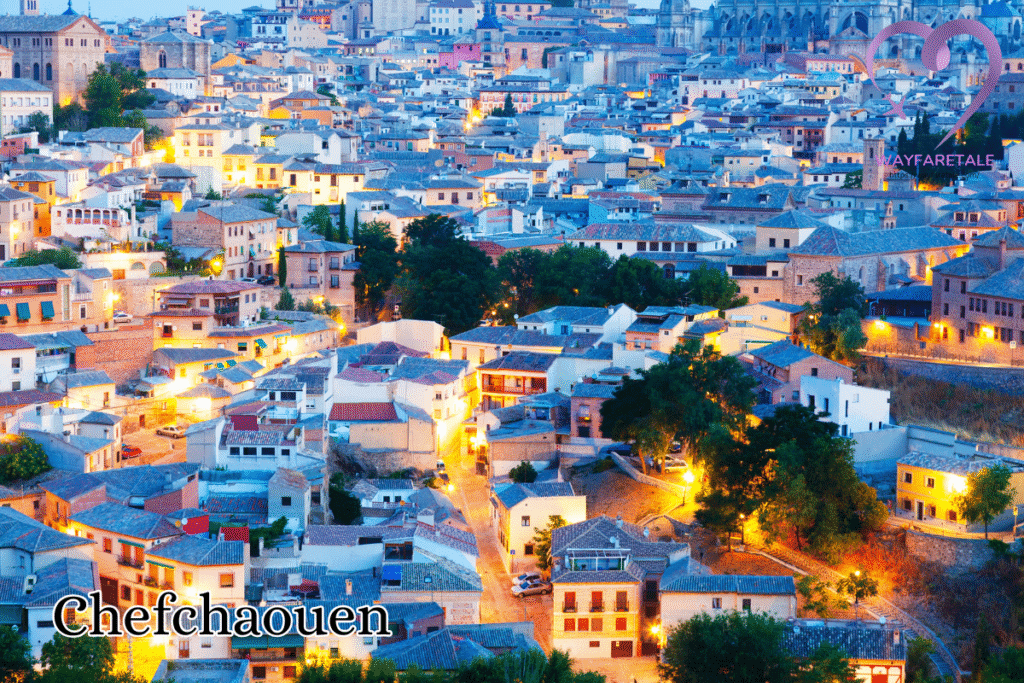
Distance covered: 275 KM
Total drive time: 4 HRS 30 MIN (including stops)
Overnight in: Chefchaouen
Today brings one of Morocco’s most scenic drives as you journey from the Atlantic coast to the Rif Mountains, with a fascinating historical detour through Morocco’s best-preserved Roman ruins.
VOLUBILIS ROMAN RUINS
This UNESCO World Heritage site represents the westernmost expansion of the Roman Empire and offers remarkable insights into ancient North African civilization. The ruins sprawl across a fertile plain near Meknes, showcasing impressive mosaics, columns, and architectural remains dating from the 3rd century BC to the 11th century AD.
Things to do at Volubilis:
- Explore the House of Orpheus – Features one of the most intricate floor mosaics in Morocco, depicting Orpheus charming animals with his lyre.
- Walk the Decumanus Maximus – The main street still shows ancient Roman urban planning with shops, houses, and public buildings lining the thoroughfare.
- Visit the Basilica and Capitol – These imposing structures demonstrate the scale of Roman architectural ambition in this remote province.
- Photography at golden hour – Late afternoon light illuminates the honey-colored stones against the backdrop of the Zerhoun Mountains.
USEFUL TIP: Entry costs 70 MAD ($7) and the site closes at sunset. Arrive by 3 PM to have adequate exploration time. The site has minimal shade, so bring water and sun protection.
CHEFCHAOUEN – THE BLUE PEARL
Nestled in the Rif Mountains, Chefchaouen captivates visitors with its distinctive blue-painted medina, creating one of Morocco’s most photogenic destinations. This small mountain town offers a tranquil contrast to the bustling imperial cities, with narrow cobblestone streets winding between azure buildings adorned with colorful flower pots.
Things to do in Chefchaouen:
- Wander the Blue Medina – Every corner reveals Instagram-worthy scenes as local residents maintain the tradition of painting their homes in various shades of blue, creating a dreamlike atmosphere.
USEFUL TIP: The best photography light occurs in the morning (8-10 AM) and late afternoon (4-6 PM) when shadows create depth and contrast against the blue walls. Midday harsh sunlight washes out the subtle blue tones.
- Climb to Plaza Uta el-Hammam – The central square buzzes with local life, surrounded by cafes serving fresh mint tea and offering perfect people-watching opportunities.
- Explore the Kasbah Museum – This 15th-century fortress houses ethnographic exhibits and provides elevated views over the medina’s blue rooftops.
- Hike to the Spanish Mosque – A moderate 45-minute uphill walk leads to this abandoned mosque, offering spectacular panoramic views of Chefchaouen nestled in the valley below.
PARKING TIP: Chefchaouen’s medina is pedestrian-only. Park at the designated lots near Bab el Ain (the main entrance) or ask your accommodation for parking arrangements. Most riads can direct you to secure nearby parking.
Where to Stay in Chefchaouen:
I stayed at Casa Perleta, a charming traditional house transformed into an intimate guesthouse. This authentic riad features stunning mountain views from its rooftop terrace, beautifully decorated rooms with local textiles, and incredibly hospitable owners who provide excellent local recommendations.
The location in the heart of the medina allows easy exploration while maintaining peaceful evening retreats. The owners can arrange traditional Berber dinners and provide detailed hiking trail information for those wanting to explore the Rif Mountains.
Book your stay at Casa Perleta through Booking.com
Day 4: Chefchaouen to Fez – Imperial City Deep Dive
Distance covered: 200 KM
Total drive time: 4 HRS
Overnight in: Fez
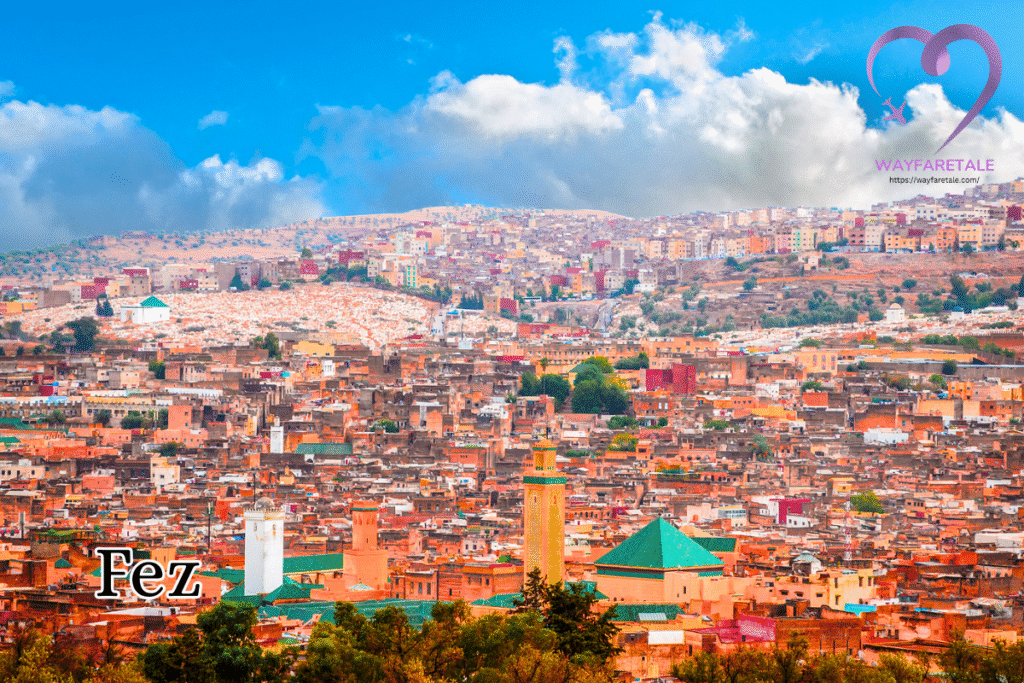
The drive from Chefchaouen to Fez descends from the Rif Mountains through olive groves and rolling hills before reaching Morocco’s spiritual and cultural capital. Fez represents the pinnacle of medieval Islamic civilization, with its ancient medina preserving centuries-old traditions virtually unchanged.
FEZ EL BALI – THE ANCIENT MEDINA
Fez el Bali constitutes the world’s largest car-free urban area and one of the world’s largest medieval cities. This UNESCO World Heritage medina contains over 9,000 narrow streets, alleys, and passages winding between madrasas, mosques, palaces, and workshops where artisans practice crafts unchanged for centuries.
Essential Experiences in Fez Medina:
- Navigate the labyrinthine streets – Getting lost is inevitable and part of the authentic experience. The medina’s organic layout defies GPS navigation, encouraging serendipitous discoveries.
USEFUL TIP: Hire an official guide for your first medina exploration. Guides provide historical context, prevent overwhelming confusion, and ensure you see major highlights efficiently. Official guides wear identification badges and charge fixed rates (approximately 200-300 MAD for half-day tours).
- Visit Bou Inania Madrasa – This 14th-century Islamic school showcases Morocco’s finest architectural details with intricate stucco work, carved cedar, and colorful zellige tiles creating geometric perfection.
- Explore the Tanneries – The Chouara Tannery offers fascinating insights into traditional leather production methods. Observe workers treating hides in ancient stone vats filled with natural dyes while the distinctive aroma provides sensory authenticity.
- Shop in the souks – Fez’s specialized markets sell everything from handwoven carpets to traditional pottery, brass work, and spices. The medina organizes crafts by neighborhoods – metalworkers in one area, textile merchants in another.
- Experience Nejjarine Museum of Wooden Arts and Crafts – This beautifully restored 18th-century founduk (merchant’s inn) displays exquisite examples of Moroccan woodworking traditions.
AL-QARAWIYYIN MOSQUE AND UNIVERSITY
Founded in 859 AD, the University of al-Qarawiyyin holds recognition as the world’s oldest continuously operating university. While non-Muslims cannot enter the mosque, the surrounding courtyard and library offer glimpses of this intellectual center that influenced medieval Islamic scholarship.
FEZ EL JDID – THE NEW CITY
Built in the 13th century, Fez el Jdid features the Royal Palace with its magnificent golden doors (viewable from outside), the Jewish Quarter (Mellah), and broader streets compared to the ancient medina.
Where to Stay in Fez:
I stayed at Riad Rcif, a traditional courtyard house offering authentic medina living within walking distance of major attractions. This restored riad features beautiful tilework, a peaceful central courtyard with fountain, and a rooftop terrace providing medina views.
The riad’s location near Rcif Gate allows easy access while avoiding the deepest medina sections where navigation becomes extremely challenging. The owners provide excellent local guidance and can arrange traditional Moroccan cooking classes.
Book your stay at Riad Rcif through Booking.com
Day 5: Fez to Merzouga – Sahara Desert Adventure
Distance covered: 465 KM
Total drive time: 7 HRS (including stops)
Overnight in: Merzouga (Desert camp)
Today presents the longest but most rewarding drive of your Morocco adventure – from the medieval streets of Fez to the golden dunes of the Sahara Desert. This epic journey crosses the Middle Atlas Mountains, passes through cedar forests, and descends into the pre-Saharan landscape.
MIDDLE ATLAS MOUNTAINS DRIVE
The route from Fez to Merzouga traverses some of Morocco’s most dramatic scenery. You’ll climb through the Middle Atlas via Ifrane (known as “Little Switzerland” for its alpine architecture) and the cedar forests of Azrou, where Barbary macaques roam freely.
KEY STOPS ALONG THE ROUTE:
- Ifrane – This mountain resort town feels surreal in Morocco with its European-style chalets and manicured gardens. Perfect for a coffee break and photos.
- Azrou Cedar Forest – Home to ancient cedar trees and troops of Barbary macaques. The monkeys are accustomed to tourists but don’t feed them despite local encouragement.
- Midelt – An excellent lunch stop with views of both Middle and High Atlas ranges. Try the local tagines at roadside restaurants.
USEFUL TIP: Start early (7 AM) to allow time for stops and arrive at Merzouga before sunset for optimal desert experience. The mountain roads can be winding, so factor extra time for careful driving.
MERZOUGA AND ERG CHEBBI DUNES
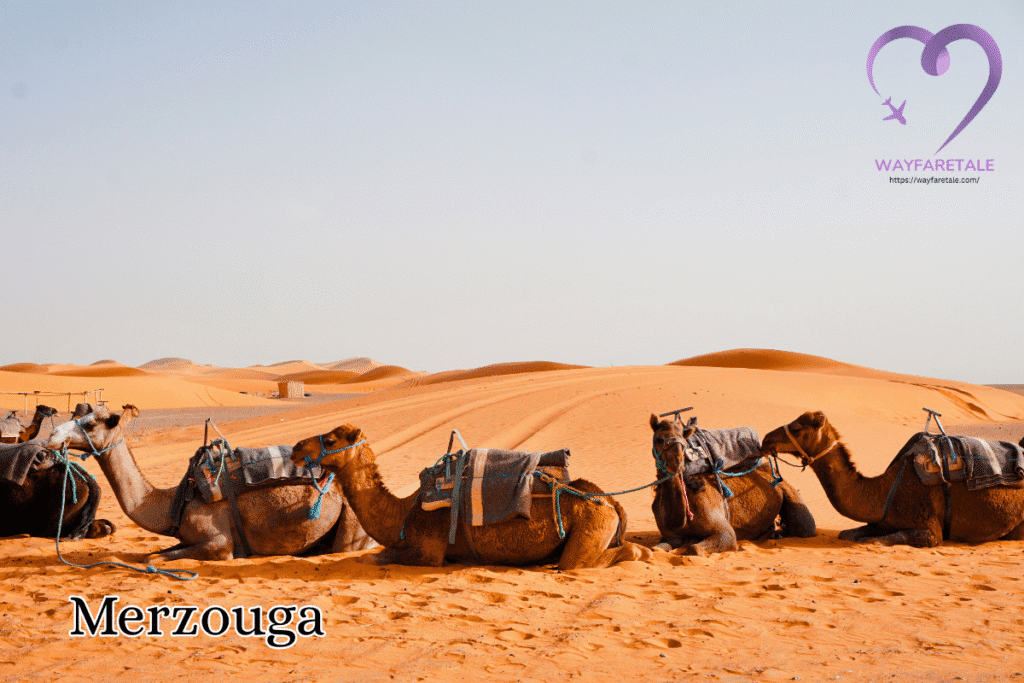
Merzouga village sits at the edge of Erg Chebbi, Morocco’s most accessible and spectacular sand sea. These towering dunes reach heights of 150 meters and stretch for 50 kilometers, creating the classic Sahara experience most travelers dream about.
Essential Sahara Desert Experiences:
- Camel Trek at Sunset – Traditional camel caravans lead you into the dunes for one of the world’s most magical sunset experiences. The silence and vastness provide profound tranquility.
- Desert Camp Overnight – Spend the night in traditional Berber tents under incredibly clear star-filled skies. Desert camps range from basic to luxury, all offering authentic experiences.
- Sunrise Dune Climbing – Wake before dawn to climb the nearest high dune for spectacular sunrise views. The physical effort rewards you with unforgettable panoramas.
- Sandboarding – Many camps provide sandboards for surfing down the dunes – an exhilarating activity particularly enjoyable for younger travelers.
PRACTICAL DESERT TIPS:
- Bring warm clothes – desert nights can be surprisingly cold
- Pack sunscreen and sunglasses for intense daytime sun reflection
- Carry water and snacks for dune activities
- Protect cameras and electronics from sand
Where to Stay in Merzouga:
I stayed at Desert Luxury Camp, a premium desert camp offering the perfect balance of authentic Berber culture and modern comfort. The spacious tents feature comfortable beds, private bathrooms, and traditional decorations while maintaining the genuine desert atmosphere.
The camp’s location deep in the dunes provides complete isolation from light pollution, ensuring incredible stargazing opportunities. Meals feature traditional tagines cooked over open fires, and evening entertainment includes Berber music around the campfire.
Book your desert camp experience through local operators or Booking.com
Day 6: Merzouga to Todra Gorge via Erfoud – Dramatic Canyons
Distance covered: 165 KM
Total drive time: 3 HRS 30 MIN
Overnight in: Todra Gorge area
After your magical desert sunrise, today’s journey leads through the pre-Saharan landscape to one of Morocco’s most dramatic natural formations – the towering walls of Todra Gorge.
ERFOUD – FOSSIL CAPITAL
Erfoud serves as the gateway to the desert and Morocco’s fossil capital. This bustling market town offers fascinating insights into the region’s geological history.
Things to do in Erfoud:
- Visit fossil workshops – Local artisans create beautiful items from ammonites, trilobites, and other fossils found in the surrounding hills.
- Explore the traditional market – Erfoud’s souk provides authentic local atmosphere without excessive tourist pressure.
- Stop at the Fossil Museum – Learn about the region’s prehistoric marine life when this area lay beneath ancient seas.
TODRA GORGE – MOROCCO’S GRAND CANYON
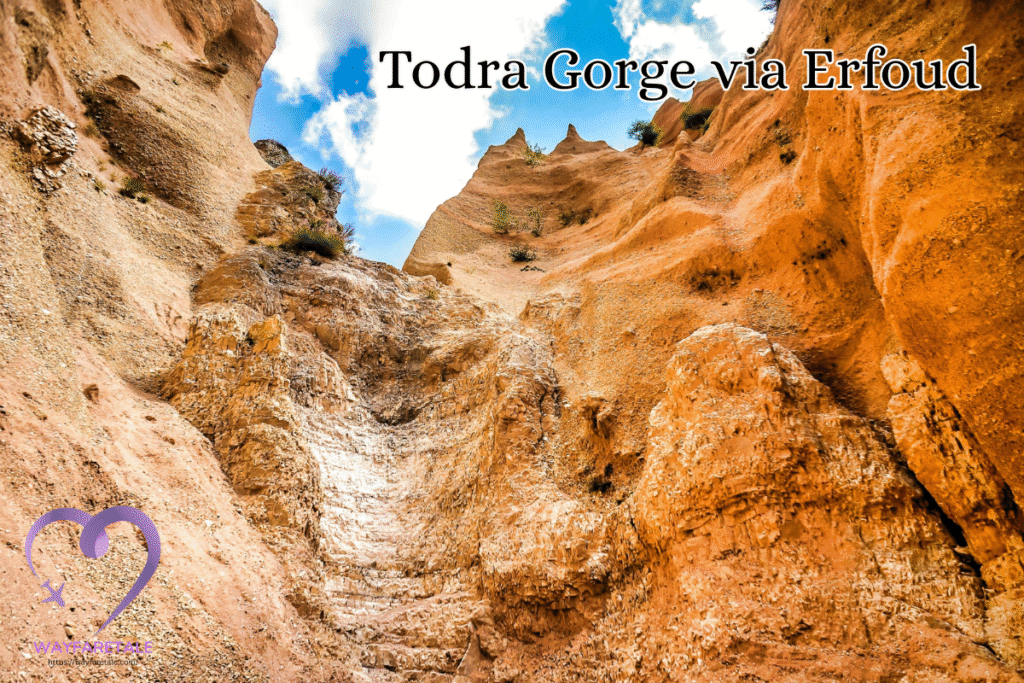
The Todra River has carved a spectacular canyon through the High Atlas limestone, creating walls rising 400 meters above the narrow valley floor. This geological wonder provides Morocco’s most dramatic scenery and popular rock climbing destination.
Essential Todra Gorge Experiences:
- Walk the Canyon Floor – A paved path leads through the narrowest section where canyon walls close to just 10 meters apart while soaring overhead.
- Rock Climbing – The gorge attracts international climbers to its challenging limestone routes. Equipment rental and guides available locally.
- Photography Workshop – The interplay of light and shadow on the canyon walls creates constantly changing photographic opportunities.
- Visit Berber Villages – Small villages dotting the valley showcase traditional mountain life with terraced gardens and ancient kasbahs.
USEFUL TIP: Visit the gorge in mid-morning or late afternoon when angled sunlight penetrates the canyon, illuminating the rock walls in golden hues. Midday creates harsh shadows with less dramatic lighting.
Where to Stay in Todra Gorge:
I stayed at Hotel Les Roches, positioned at the entrance to the gorge with direct access to hiking trails and canyon exploration. The hotel features traditional architecture with modern amenities and a restaurant serving excellent Berber cuisine.
The location allows easy early morning walks in the gorge before tour buses arrive, providing peaceful canyon experiences. Evening dining on the terrace offers stunning views of the illuminated canyon walls.
Day 7: Todra Gorge to Marrakech via Ait Ben Haddou – Imperial Finale
Distance covered: 330 KM
Total drive time: 6 HRS (including stops)
Overnight in: Marrakech
Your final day combines Morocco’s most famous kasbah with arrival in the vibrant imperial city of Marrakech – the perfect crescendo to your week-long adventure.
AIT BEN HADDOU – HOLLYWOOD OF MOROCCO
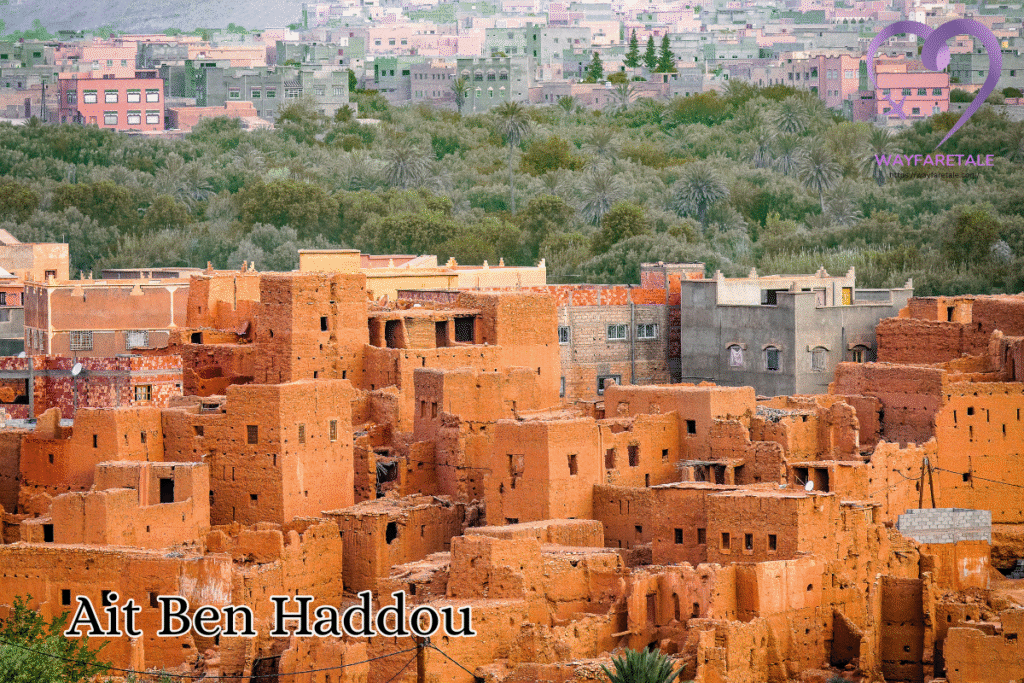
This UNESCO World Heritage fortified village represents Morocco’s most spectacular and well-preserved kasbah. Built along ancient trans-Saharan trade routes, Ait Ben Haddou’s dramatic architecture has featured in numerous Hollywood films including Lawrence of Arabia, Gladiator, and Game of Thrones.
Essential Ait Ben Haddou Experiences:
- Climb to the Granary – The steep path to the summit rewards visitors with panoramic views over the kasbah and surrounding valley.
- Explore the Traditional Houses – Several families still inhabit the kasbah, maintaining traditional Berber lifestyle and offering guided tours of their homes.
- Photography from Multiple Angles – Cross the seasonal river to capture classic postcard views of the entire fortified village against the Atlas Mountains backdrop.
- Visit at Golden Hour – Late afternoon light transforms the mud-brick architecture into glowing amber tones.
USEFUL TIP: Entry to the kasbah is free, but families offering house tours expect small tips (20-30 MAD). The climb to the top requires moderate fitness and sturdy shoes for the rocky path.
MARRAKECH – THE RED CITY
Marrakech provides the perfect finale to your Morocco road trip with its intoxicating blend of medieval history and modern energy. The city’s red sandstone buildings, bustling medina, and vibrant street life create an unforgettable urban experience.
Essential Marrakech Highlights:
- Djemaa el-Fna Square – The heart of Marrakech transforms throughout the day from orange juice vendors and henna artists to evening food stalls and traditional musicians.
- Koutoubia Mosque – The city’s landmark minaret dominates the skyline and provides orientation throughout the medina.
- Majorelle Garden – This botanical garden, restored by Yves Saint Laurent, offers peaceful respite from medina intensity with exotic plants and distinctive blue architecture.
- Souks Shopping – Marrakech’s markets provide Morocco’s best shopping with carpets, leather goods, spices, and traditional crafts.
- Bahia Palace – This 19th-century palace showcases Moroccan architectural artistry with intricate tilework and peaceful courtyards.
Where to Stay in Marrakech:
I stayed at Riad Yasmine, a beautifully restored traditional riad in the heart of the medina. This authentic guesthouse features a stunning central courtyard, rooftop terrace with Atlas Mountain views, and luxuriously appointed rooms decorated with traditional textiles and crafts.
The riad’s location allows easy exploration of major attractions while providing a tranquil retreat from Marrakech’s intensity. The staff provides excellent local recommendations and can arrange traditional hammam experiences and cooking classes.
Book your stay at Riad Yasmine through Booking.com
What I Skipped and Would Suggest Skipping
Casablanca Extended Stay – Beyond the Hassan II Mosque, Casablanca lacks the historical charm of other Moroccan cities. One morning is sufficient for most travelers.
Meknes – While historically significant as an imperial city, Meknes doesn’t offer unique experiences not found in Fez or Marrakech. Time is better spent in other destinations.
Agadir – This modern beach resort lacks authentic Moroccan character. Coastal experiences are better found in Essaouira.
Ouarzazate Extended Stay – While the film studios might interest cinema fans, the city itself offers limited attractions beyond being a transit point.
Additional Morocco Travel Resources
Planning your Morocco adventure? Here are essential booking resources I personally use:
- Find the BEST FLIGHTS to Morocco using Skyscanner or Kayak for competitive rates and flexible date options
- Rent your car at the BEST RATES with Kayak or Enterprise Morocco for reliable vehicles and comprehensive insurance
- Find PERFECT ACCOMMODATION on Booking.com or Airbnb for authentic riads and local experiences
- Secure TRAVEL INSURANCE through World Nomads or SafetyWing for comprehensive coverage
- Book GUIDED DESERT TOURS on Viator or GetYourGuide for professional Sahara experiences
This comprehensive Morocco road trip itinerary provides the perfect introduction to this captivating kingdom’s highlights while allowing flexibility for personal interests and travel pace. The combination of imperial cities, Sahara Desert, Atlas Mountains, and cultural immersion creates memories that will last a lifetime.