
South Korea Road Trip: Epic One-Week Itinerary Through the Land of Morning Calm!
South Korea is an incredible destination for an East Asian road trip. This detailed one-week South Korea road trip itinerary covers the best places in the country that you can visit in 7-10 days.
South Korea is a compact yet incredibly diverse country with so much to explore! Scenic highways wind through ancient temples, vibrant coastal cities, volcanic islands, dramatic mountain ranges, and traditional hanok villages. Therefore, going on a South Korea road trip is by far the best way to explore this dynamic country where ancient traditions meet cutting-edge modernity.
With your own wheels, you will be able to explore the best places in South Korea conveniently. Although some sights can be reached by Korea’s excellent public transport system or using organized tours, many of the most amazing places are best accessed by car, giving you the freedom to stop at hidden gems along the way.
Based on my experience exploring this wonderful country, I put together this comprehensive one-week South Korea road trip itinerary covering Seoul, coastal cities, volcanic Jeju Island, traditional villages, and mountain temples. It also indicates the distance traveled, provides an interactive map, and suggests places to stay in South Korea.
Essential South Korea Road Trip Resources:
- Car rental tip 1: Rentalcars.com is an excellent choice for comparing rates from major international and local Korean rental companies. I’ve used this site multiple times for my Korea trips and always found competitive prices.
- Car rental tip 2: For the best deals, check DiscoverCars. This car search aggregator helped me save up to 60% on rental rates in Korea by comparing different providers.
- Stay: I booked all my accommodation in South Korea on Booking.com and Agoda (the latter often has better rates for Asian properties).
- Travel Insurance: Purchase reliable travel insurance at Heymondo or SafetyWing for peace of mind during your trip.
- Check the best guided tours in South Korea on Viator or GetYourGuide.
Summary of My South Korea Road Trip Route
- Day 1: Seoul – Gyeongbokgung Palace, Bukchon Hanok Village, Namsan Tower
- Day 2: Seoul to Gyeongju (4 hours) – Historic Bulguksa Temple, Seokguram Grotto
- Day 3: Gyeongju to Busan (1.5 hours) – Gamcheon Culture Village, Haeundae Beach
- Day 4: Busan – Haedong Yonggungsa Temple, Jagalchi Fish Market
- Day 5: Busan to Jeonju (3 hours) – Jeonju Hanok Village, Bibimbap Trail
- Day 6: Jeonju to Seoraksan (4.5 hours) – Seoraksan National Park hiking
- Day 7: Seoraksan to Seoul (3 hours) – Return via scenic routes
If I had 10 Days in South Korea, my itinerary would include Seoul – Gyeongju – Busan – Jeju Island (3 days) – Jeonju – Seoraksan National Park – Seoul.
If I had 5 Days in South Korea, my itinerary would focus on Seoul – Gyeongju – Busan – Seoul, covering the essential cultural and coastal highlights.
South Korea Road Trip Planning Tips

Renting a Car in South Korea
Major car rental companies operate at Incheon International Airport and throughout Seoul. I highly recommend booking in advance through comparison sites like Rentalcars.com or DiscoverCars to secure the best rates. Korean rental companies like Lotte Rent-a-Car and AJ Rent-a-Car also offer competitive prices.
Important: You’ll need an International Driving Permit (IDP) along with your regular driver’s license to rent and drive in South Korea. Make sure to obtain this before your trip.
Driving in South Korea
Driving is an excellent way to explore South Korea at your own pace. The country has some of the best road infrastructure in Asia, with well-maintained highways and clear signage (often in English). Having your own vehicle allows you to access remote temples, coastal villages, and mountain trails that would be difficult to reach otherwise.
South Korea’s highway system is extensive and efficient. The tolls are reasonable and mostly automated using Hi-Pass systems. Distances between major cities are manageable – Seoul to Busan takes about 4-5 hours on the expressway.
Driving Tips:
- GPS navigation is essential. Most rental cars come with English GPS, or you can use apps like KakaoMap or Naver Map.
- Koreans drive on the right side of the road.
- Speed cameras are common, so stick to speed limits (usually 100-110 km/h on highways).
- Parking can be challenging in major cities but is generally affordable (₩2,000-5,000 per hour).
- Gas stations are plentiful. Fill up before heading to remote mountain areas.
Where to Stay During the South Korea Road Trip
Throughout my journey, I mixed modern hotels with traditional hanok stays and guesthouses. This variety gave me a fuller experience of Korean culture and hospitality. When traveling with a rental car, I always looked for accommodation with parking facilities, which is relatively easy to find outside Seoul.
Accommodation booking: I primarily used Booking.com and Agoda for reservations. Both platforms offer excellent options across all price ranges, from budget guesthouses to luxury hotels. As a returning customer, you often get special discounts.
Tip: Always check the cancellation policy. I prefer booking places with flexible cancellation up to 24-48 hours before arrival, giving me peace of mind if plans change.
Quick summary of where I stayed:
I’ll provide detailed recommendations for each location later in this post. You can find more reviews and book through Booking.com or Agoda.
Accommodation List:
- Seoul – Modern hotel in Myeongdong district – 2 nights
- Gyeongju – Traditional hanok guesthouse – 1 night
- Busan – Beachfront hotel in Haeundae – 2 nights
- Jeonju – Traditional hanok stay in Hanok Village – 1 night
- Sokcho (Seoraksan) – Mountain guesthouse – 1 night
What to Expect in South Korea?
In South Korea, you’ll experience an incredible blend of ancient and modern. From the futuristic skyline of Seoul with its K-pop culture and high-tech districts to centuries-old Buddhist temples nestled in misty mountains. You’ll wander through traditional hanok villages where time seems to have stopped, enjoy world-class cuisine from street food to Michelin-starred restaurants, and relax on beautiful beaches along the dramatic coastline.
The Korean people are exceptionally hospitable, and while English isn’t widely spoken outside major tourist areas, you’ll find that locals are eager to help. The food scene alone is worth the trip – from sizzling Korean BBQ to comforting bowls of bibimbap and countless banchan (side dishes) that accompany every meal.
How Many Days Do You Need in South Korea?
Based on my experience, one week in South Korea is sufficient to cover the main highlights including Seoul, historic Gyeongju, vibrant Busan, and either a mountain region or traditional village. If you want to include Jeju Island (which I highly recommend), you’ll need at least 10 days to do the country justice.
For those with limited time, even 5 days can give you a good taste of South Korea’s diversity by focusing on Seoul, Gyeongju, and Busan.
When to Visit South Korea?
The best times to visit South Korea are spring (April-May) and autumn (September-November). Spring brings stunning cherry blossoms that blanket the country, while autumn offers comfortable temperatures and spectacular fall foliage in the mountains.
Summer (June-August) can be hot and humid with monsoon rains, but it’s perfect for beach activities in Busan and Jeju Island. Winter (December-February) is cold but ideal for skiing and seeing temples covered in snow – just be prepared for freezing temperatures, especially in mountainous areas.
Budget for Your Road Trip in South Korea
South Korea is moderately priced compared to other developed Asian countries. It’s more expensive than Southeast Asia but more affordable than Japan. Here’s a rough breakdown:
- Accommodation: ₩50,000-100,000/night ($40-80 USD) for a comfortable hotel or guesthouse
- Food: ₩30,000-60,000/day ($25-50 USD) depending on where you eat
- Car Rental: ₩40,000-80,000/day ($30-65 USD) for a compact car booked in advance
- Fuel: ₩1,700/liter ($1.30 USD) for gasoline (2024 prices)
- Highway Tolls: ₩20,000-40,000 ($15-30 USD) for long-distance routes
- Attractions: Many temples and parks charge ₩3,000-5,000 ($2-4 USD) entrance fees
South Korea One-Week Road Trip Itinerary Day by Day
For those wanting to experience the best of what South Korea has to offer, here’s my detailed day-by-day breakdown of the route I took during my one-week road trip through this captivating country.
Day 1: Seoul – Gyeongbokgung Palace, Bukchon Hanok Village, Namsan Tower
– Distance covered: 25 KM (within Seoul)
– Total drive time: 1 HR (with traffic)
– Overnight in: Seoul (Myeongdong area) for 2 consecutive nights
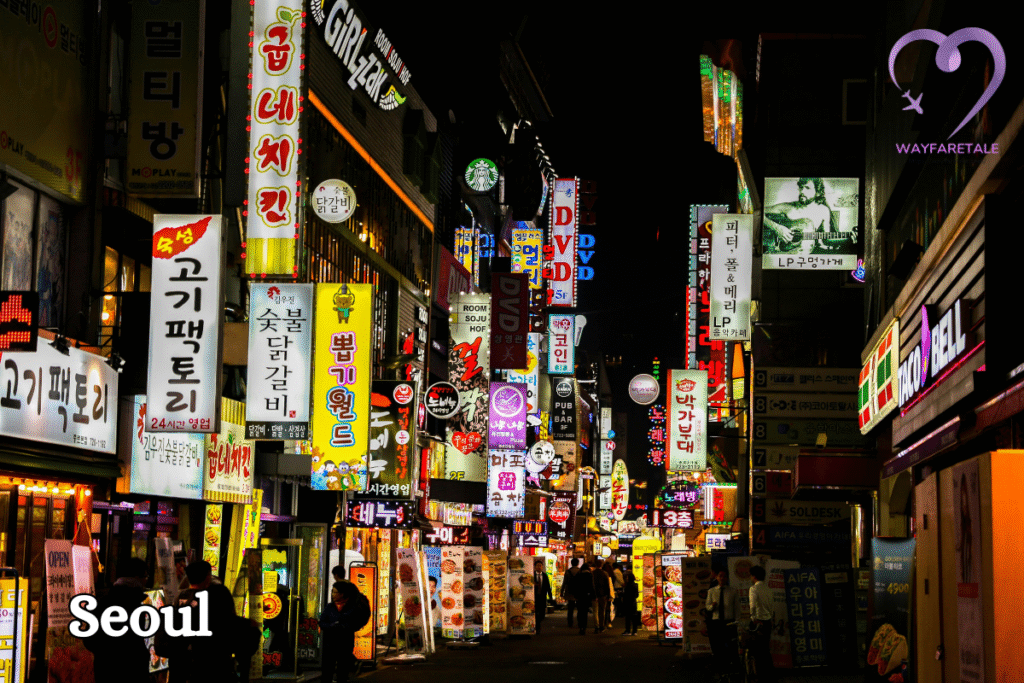
After landing at Incheon International Airport, I picked up my rental car and headed straight into Seoul. The drive from the airport to central Seoul takes about an hour, depending on traffic. I decided to base myself in Myeongdong, a vibrant shopping district with excellent access to major attractions and plenty of parking options.
IMPORTANT TIP: If you’re arriving in Seoul and plan to explore the city on Day 1, consider taking the Airport Railroad Express (AREX) into the city and picking up your rental car on Day 2 when you leave Seoul. Driving and parking in Seoul can be challenging, and the public transport is excellent. I actually kept my car parked at the hotel during my Seoul days and used the subway instead.
Things to Do in Seoul
GYEONGBOKGUNG PALACE
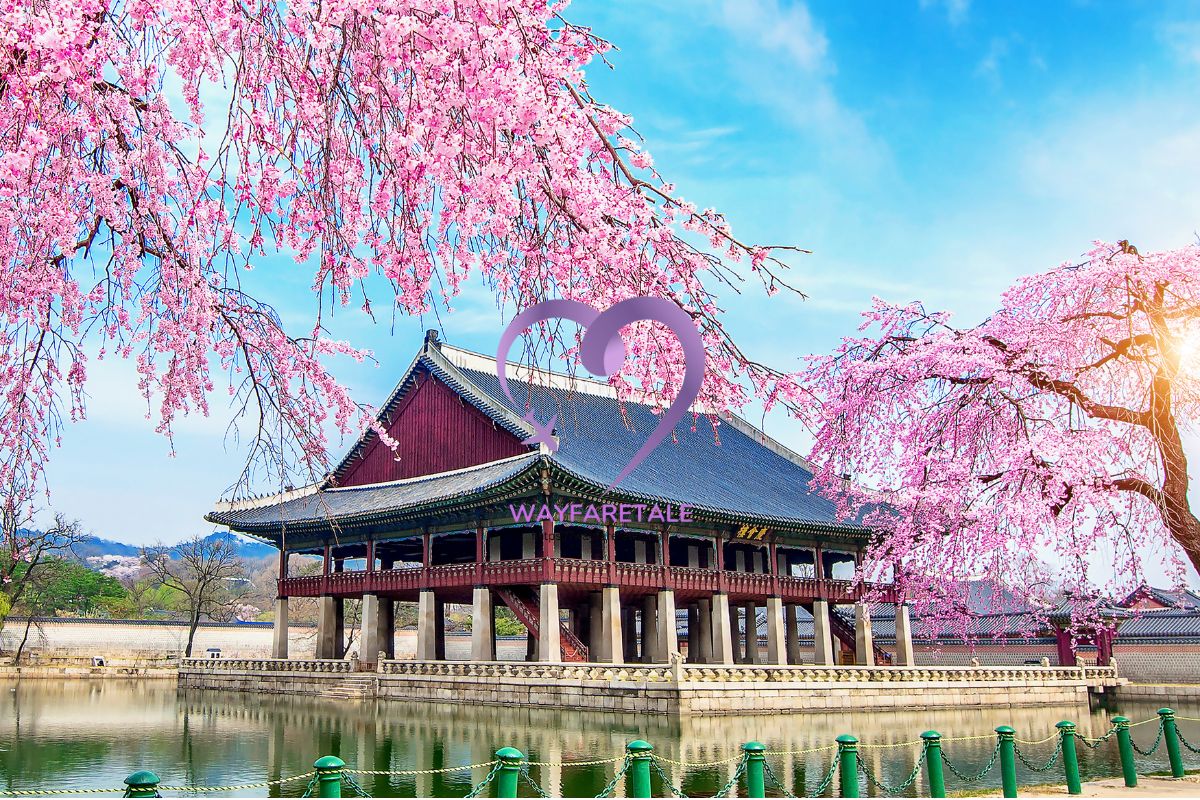
No visit to Seoul is complete without exploring Gyeongbokgung Palace, the largest of Seoul’s Five Grand Palaces. Built in 1395, this stunning complex served as the main royal palace of the Joseon dynasty. I arrived early at 9 AM when the gates opened to avoid the midday crowds and tour groups.
Walking through the massive Gwanghwamun Gate felt like stepping back in time. The colorful painted details on the palace buildings, the intricate roof tiles, and the mountain backdrop create an absolutely magical atmosphere. Don’t miss the Changing of the Guard ceremony that takes place at 10 AM and 2 PM – it’s a vibrant display of traditional Korean military culture with guards in colorful Joseon-era uniforms.
USEFUL TIP: If you wear a hanbok (traditional Korean clothing), you get FREE entry to the palace! There are numerous hanbok rental shops near the palace entrance charging around ₩15,000-25,000 for a few hours. I rented one and not only saved the entrance fee but also got amazing photos and felt like I was truly part of Korean history.
The National Palace Museum and the National Folk Museum are both located within the palace grounds and are worth exploring if you have time. The palace complex is huge, so plan to spend at least 2-3 hours here.
BUKCHON HANOK VILLAGE
Just a 15-minute walk from Gyeongbokgung Palace, Bukchon Hanok Village is a living neighborhood of traditional Korean houses (hanok) dating back to the Joseon Dynasty. Walking through the narrow alleyways between these beautiful wooden structures with their curved tile roofs was one of my favorite Seoul experiences.
The village sits on a hill between two palaces, offering stunning views of modern Seoul’s skyscrapers in the distance – a perfect symbol of Korea’s blend of old and new. Many of the hanok houses have been converted into cultural centers, tea houses, restaurants, and guesthouses.
PHOTOGRAPHY TIP: Head to the famous viewpoint at the end of alley 31-6 (just look for the signs). From here, you get the iconic shot of traditional hanok roofs with Seoul Tower in the background. Arrive early morning (before 8 AM) or late afternoon to avoid crowds of tourists all trying to get the same shot.
Important: Remember that Bukchon is a residential area. Please be respectful of the people who actually live there – keep noise down and follow the posted etiquette signs.
INSADONG STREET
After exploring the hanok village, I wandered down to nearby Insadong, Seoul’s cultural heart. This pedestrian-friendly street is lined with art galleries, traditional craft shops, tea houses, and souvenir stores. It’s the perfect place to pick up authentic Korean crafts, traditional pottery, or beautiful hanji (Korean paper) products.
I stopped for lunch at one of the traditional Korean restaurants and had an incredible meal of bibimbap accompanied by what seemed like endless banchan (side dishes). The hospitality was warm, and despite the language barrier, the staff made me feel completely welcome.
NAMSAN TOWER (N SEOUL TOWER)
As evening approached, I drove up to Namsan Mountain to catch the sunset from N Seoul Tower. The tower sits 236 meters above sea level and offers 360-degree views of Seoul’s sprawling metropolis. Watching the city transform as millions of lights blinked on was absolutely breathtaking.
PARKING TIP: There’s a parking lot at the base of Namsan, and you can either hike up (about 30 minutes) or take the cable car (₩11,000 round trip). I chose the cable car and enjoyed the ascending views. The parking fee is around ₩3,000 for a few hours.
The tower itself charges ₩16,000 for observatory access, but honestly, the views from the base area are already spectacular and free. The famous “Locks of Love” fence surrounds the plaza – couples attach padlocks as symbols of their eternal love.
Where to Stay in Seoul?
I stayed at a modern business hotel in Myeongdong, which was perfect for my needs. The location was incredibly convenient – walking distance to Myeongdong shopping street, close to multiple subway stations, and the hotel had secure parking (essential if you’re driving in Seoul).
Myeongdong can be noisy at night due to street vendors and crowds, so if you prefer quieter accommodation, consider staying in Jongno area near the palaces, or in the trendy Gangnam district south of the Han River.
Book your Seoul accommodation on Booking.com or Agoda
Day 2: Seoul to Gyeongju – The Historic Heart of Korea
– Distance covered: 370 KM
– Total drive time: 4 HRS (highway driving)
– Overnight in: Gyeongju (Traditional hanok stay)
After breakfast, I checked out of my Seoul hotel and began the drive southeast toward Gyeongju, the ancient capital of the Silla Kingdom. This was my first real experience with Korean highways, and I was impressed by how well-maintained and clearly signposted they are.
The drive takes you through Korea’s beautiful countryside, past rice paddies, small towns, and eventually into the mountainous regions. I stopped at one of the highway service areas (휴게소) – these are unlike any rest stops I’ve experienced elsewhere. They’re massive complexes with food courts, convenience stores, souvenir shops, and even game arcades. I grabbed some kimbap (Korean seaweed rice rolls) and continued my journey.
HIGHWAY TIP: Korean highway service areas are actually destination-worthy! The food is good and affordable, bathrooms are spotless, and many have local specialties you won’t find elsewhere. My favorite was the walnut cakes at Gyeongju Service Area.
Arriving in Gyeongju
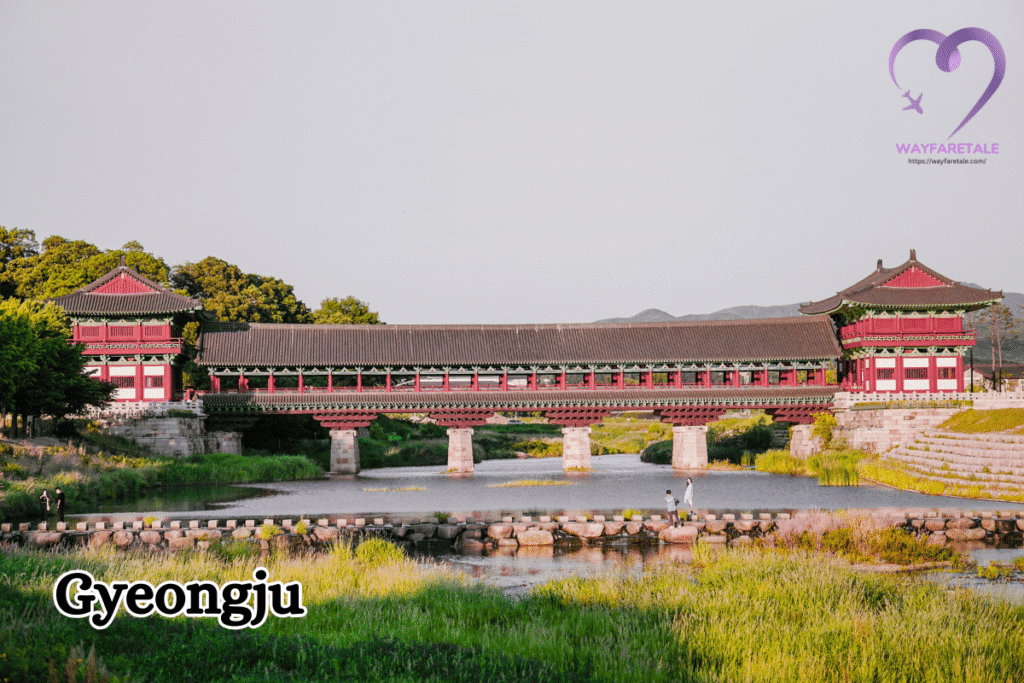
Gyeongju is often called “the museum without walls” because the entire city is dotted with ancient temples, royal tombs, and archaeological sites. It served as the capital of the Silla Kingdom for nearly 1,000 years, and that incredible history is visible everywhere you look.
I arrived in Gyeongju around 2 PM and headed straight to my hanok guesthouse in the traditional neighborhood. After checking in and freshening up, I had the afternoon to explore some of Gyeongju’s incredible UNESCO World Heritage sites.
BULGUKSA TEMPLE
Bulguksa Temple is one of Korea’s most important Buddhist temples and absolutely stunning. Built in 751 during the Silla Kingdom, this temple complex represents the epitome of Buddhist art from Korea’s Golden Age. The entrance fee is ₩6,000, but it’s worth every won.
As I walked through the temple grounds, I was struck by the incredible architectural harmony – stone bridges, pagodas, and temple halls blend seamlessly with the surrounding forest. The two stone pagodas, Dabotap and Seokgatap, are masterpieces that have stood for over 1,200 years.
MEDITATION TIP: If you arrive late afternoon (around 4-5 PM), the temple is quieter and the light filtering through the trees creates an almost mystical atmosphere. I sat in the courtyard for nearly an hour just soaking in the peace and spirituality of the place.
SEOKGURAM GROTTO
Just a few kilometers up the mountain from Bulguksa Temple sits Seokguram Grotto, an artificial cave temple featuring a magnificent granite Buddha statue. The drive up the winding mountain road offers beautiful views of the surrounding forest.
The grotto itself is a UNESCO World Heritage Site and represents the pinnacle of Buddhist sculpture in Asia. The Buddha sits serenely facing the East Sea, and the engineering that went into creating this temperature-controlled artificial cave in the 8th century is remarkable.
Important note: You can’t enter the grotto chamber itself – you view the Buddha through glass to protect the delicate environment. But even from behind the glass, the serene beauty of the statue is moving. The entrance fee is ₩6,000 (or you can buy a combined ticket with Bulguksa for ₩10,000).
GYEONGJU TRADITIONAL DINNER
After returning from the temples, I explored Gyeongju’s city center and had dinner at a traditional Korean restaurant specializing in Gyeongju cuisine. I tried ssambap (rice and side dishes wrapped in lettuce leaves) and the famous Gyeongju bread – sweet red bean-filled pastries that are a local specialty.
Where to Stay in Gyeongju?
Staying in a traditional hanok in Gyeongju was one of the highlights of my trip. The guesthouse I booked was in a beautifully restored hanok with heated floors (ondol), paper doors, and a tranquil courtyard. The owners were incredibly hospitable and shared stories about Gyeongju’s history over traditional breakfast in the morning.
The only consideration with hanok stays is that the sleeping arrangements are traditional – you sleep on thin mattresses on the heated floor, and walls are thin. But the authentic cultural experience is absolutely worth it. Prices range from ₩50,000-100,000 per night depending on the season.
Book hanok accommodation in Gyeongju on Booking.com
Day 3: Gyeongju Exploration to Busan – Korea’s Dynamic Port City
– Distance covered: 370 KM (including Gyeongju morning exploration + drive to Busan)
– Total drive time: 1 HR 30 MIN (Gyeongju to Busan)
– Overnight in: Busan (Haeundae Beach area) for 2 consecutive nights
MORNING IN GYEONGJU: TUMULI PARK
I woke up early to explore more of Gyeongju before the drive to Busan. My first stop was Daereungwon Tomb Complex (Tumuli Park) – a surreal park filled with massive grass-covered burial mounds of Silla royalty. Walking among these ancient tombs in the morning mist felt like being transported to another world.
The park is located right in the city center, and entrance is ₩3,000. You can actually enter one of the tombs (Cheonmachong) to see how the burial chambers were constructed and view artifacts that were discovered inside. The famous gold crown from this tomb is now in the Gyeongju National Museum, which is also worth visiting if you have extra time.
CHEOMSEONGDAE OBSERVATORY
Just a short walk from Tumuli Park, I visited Cheomseongdae, the oldest surviving astronomical observatory in East Asia. This bottle-shaped stone tower was built in the 7th century and is a testament to the advanced scientific knowledge of the Silla Kingdom. It’s free to view from the outside, and the surrounding park with its fields and traditional bridges makes for beautiful photos.
DRIVING TO BUSAN
Around 11 AM, I said goodbye to historic Gyeongju and hit the road toward Busan, Korea’s second-largest city. The drive is relatively short – just 1.5 hours on the highway – and the scenery becomes increasingly coastal as you approach the city.
Busan is completely different from Seoul. While Seoul is all about royal palaces and modern technology, Busan has a more laid-back vibe with its beaches, mountains, and fresh seafood. The city sits on the coast with mountains rising behind it, creating dramatic scenery everywhere you look.
GAMCHEON CULTURE VILLAGE
After checking into my beachfront hotel in Haeundae, I drove to Gamcheon Culture Village, one of Busan’s most colorful and Instagram-famous attractions. This hillside neighborhood was once a poor shantytown, but it’s been transformed into an outdoor art gallery with brightly painted houses, murals, sculptures, and art installations covering every surface.
PARKING TIP: Parking at Gamcheon can be challenging. There are a few paid parking lots at the base of the village (around ₩2,000 per hour), but they fill up quickly. I arrived around 2 PM and had to circle a bit before finding a spot. Consider taking a taxi or bus if you’re staying nearby.
Walking through the narrow alleys and steep staircases of Gamcheon was like being inside a rainbow. Every corner revealed new art installations – the famous “Little Prince” statue, colorful fish murals, whimsical sculptures. The views over Busan’s harbor from the upper levels are spectacular.
The village has plenty of quirky cafes and small shops selling handmade crafts. I stopped for coffee at one of the rooftop cafes and spent an hour just watching the light change over the painted houses.
USEFUL TIP: Wear comfortable shoes! Gamcheon is very hilly with lots of stairs. Also, remember this is still a residential area, so be respectful of residents’ privacy.
HAEUNDAE BEACH SUNSET
As evening approached, I headed back to Haeundae Beach, one of Korea’s most famous beaches. Even though it was crowded (Haeundae is always busy), the energy was infectious. Locals were playing volleyball, couples were walking along the shore, and the beachfront cafes were buzzing with life.
I walked along the beach promenade as the sun set over the water, turning the sky shades of orange and pink. The modern skyscrapers of Marine City provided a stunning backdrop – another example of Korea’s seamless blend of nature and urban development.
For dinner, I explored the streets behind the beach and found a great Korean BBQ restaurant. Grilling my own beef and pork at the table while enjoying soju with locals at the next table was the perfect end to an action-packed day.
Where to Stay in Busan?
I highly recommend staying in the Haeundae area if you’re visiting Busan. While it’s the touristy part of town, the beach location is unbeatable, and there are countless restaurants, cafes, and bars within walking distance. The area has plenty of hotels across all price ranges.
I stayed at a mid-range hotel right across from the beach. Waking up to ocean views and being able to walk to the beach in minutes made the slightly higher price worth it. The hotel also had parking (essential in Busan), though I used the car sparingly and walked or took the subway for most city exploring.
Book your Busan accommodation on Booking.com or Agoda
Day 4: Busan – Haedong Yonggungsa Temple, Jagalchi Market, and Taejongdae
– Distance covered: 45 KM (within Busan)
– Total drive time: 1 HR 30 MIN (with traffic and stops)
– Overnight in: Busan (Haeundae Beach area)
I woke up early on Day 4 to make the most of my second day in Busan. The city has so much to offer that even two full days barely scratches the surface, but I managed to hit the most spectacular highlights.
HAEDONG YONGGUNGSA TEMPLE
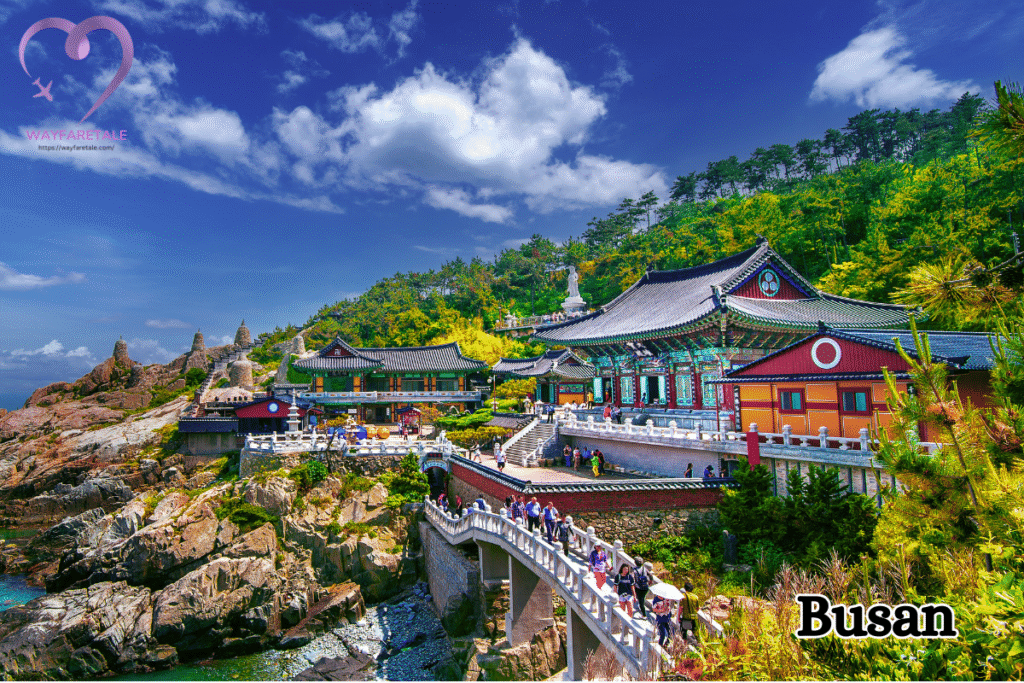
My first destination was Haedong Yonggungsa Temple, and I’m not exaggerating when I say this is one of the most breathtakingly beautiful temples I’ve ever visited anywhere in the world. Unlike most Korean Buddhist temples that nestle in the mountains, Haedong Yonggungsa sits dramatically on cliffs overlooking the East Sea.
I arrived at 7 AM, right when the temple opens, to avoid the tour bus crowds that descend later in the morning. The drive from Haeundae takes about 30 minutes, and there’s a parking lot near the entrance (₩2,000 for a few hours).
Walking down the stone steps toward the temple complex, with waves crashing against the rocks below and the morning sun illuminating the colorful buildings, was absolutely magical. The main temple hall sits right at the ocean’s edge, and watching monks perform their morning prayers with the sound of waves in the background gave me chills.
PHOTOGRAPHY TIP: The best shots are from the pathway before you reach the main temple. Arrive early morning or late afternoon for the best light. The golden hour here is spectacular, with the sun hitting the temple buildings and reflecting off the water.
The temple grounds include several smaller shrines, a three-story pagoda, and statues scattered among the rocks. Don’t miss the Dragon statue fountain where locals fill bottles with water believed to have healing properties. The temple is free to enter, though donations are appreciated.
USEFUL TIP: Wear shoes that are easy to remove since you’ll need to take them off to enter the prayer halls. Also, be respectful – this is an active place of worship, so keep voices down and dress modestly.
HAEDONG YONGGUNGSA TO TAEJONGDAE COASTAL DRIVE
After spending two hours at the temple, I drove along Busan’s scenic coastal roads toward Taejongdae Park. The drive itself is gorgeous, passing rocky coastlines, small beaches, and fishing villages. I made several spontaneous stops just to take photos of the dramatic seascapes.
TAEJONGDAE PARK
Taejongdae is a natural park on Busan’s southern coast featuring rugged cliffs, dense forests, and spectacular ocean views. The park is named after King Taejong Muyeol of the Silla Dynasty, who supposedly came here to practice archery.
Parking is available at the main entrance (₩2,000), and there’s a ₩2,000 entrance fee per person. You can either hike the scenic trails (about 4-5 km loop) or take the Danubi tourist train (₩3,000) that circles the park with stops at major viewpoints.
I opted for hiking, and it was absolutely worth it. The trail winds through pine forests and along dramatic cliffs. The main highlight is the lighthouse and observatory at the southern tip of the peninsula, where you get 180-degree views of the open ocean. On clear days, you can apparently see Tsushima Island in Japan, though I couldn’t on my visit.
There’s also Taejongsa Temple tucked into the cliffs – much smaller than Haedong Yonggungsa but with its own charm and incredible ocean views from its small platform.
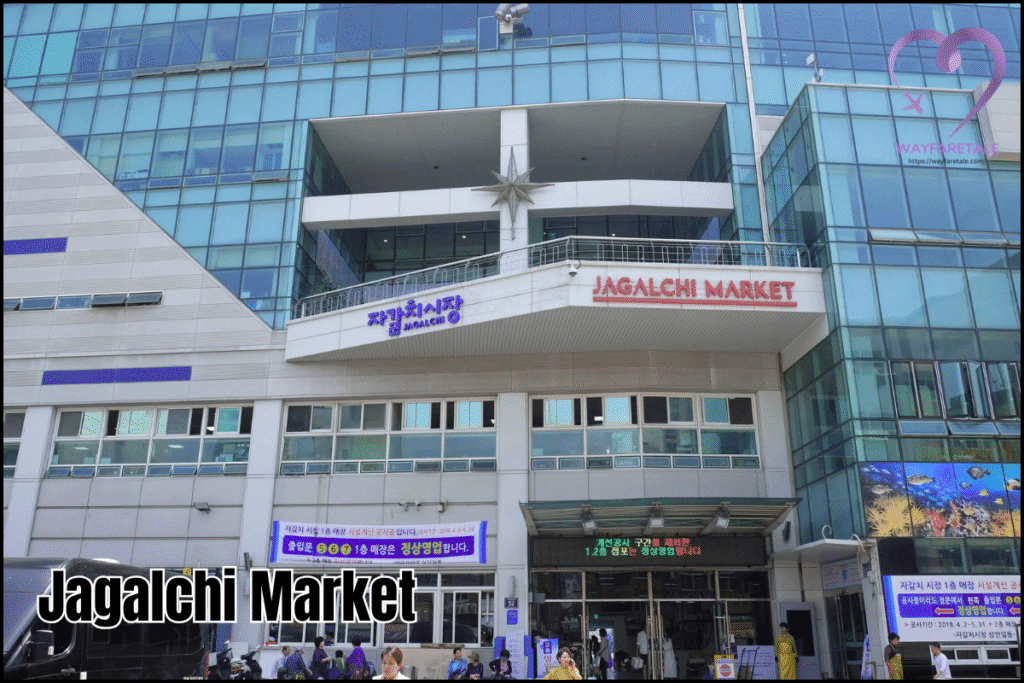
JAGALCHI FISH MARKET
After Taejongdae, I drove back toward the city center to visit Jagalchi Fish Market, Korea’s largest seafood market. The energy here is incredible – vendors shouting, tanks full of live fish, octopus, crabs, and sea creatures I couldn’t even identify.
The market is massive, with the ground floor featuring rows and rows of seafood stalls where you can buy fresh catch. What I loved most is that you can buy seafood downstairs and then take it upstairs to the restaurant floor where they’ll prepare it for you however you want – grilled, raw as sashimi, in a spicy stew, you name it.
PARKING TIP: Parking near Jagalchi can be a nightmare. I parked at a nearby public parking lot and walked about 10 minutes. Consider taking the subway (Jagalchi Station on Line 1) if you’re staying nearby.
I selected some incredibly fresh sea bream and had it prepared as hoe (Korean-style sashimi) with all the accompaniments – lettuce wraps, kimchi, dipping sauces. The fish literally couldn’t have been fresher – it was swimming minutes before! The whole experience cost about ₩35,000 and was one of my most memorable meals in Korea.
BIFF SQUARE AND NAMPO-DONG
After lunch, I wandered around nearby BIFF Square (Busan International Film Festival Square) and Nampo-dong shopping district. This area is packed with street food vendors, and I couldn’t resist trying some local specialties:
- Ssiat hotteok (seed-stuffed sweet pancakes) – crispy on the outside, gooey and sweet inside with sunflower and pumpkin seeds
- Eomuk (fish cakes) – Busan is famous for these, and they’re served on skewers in hot broth
- Tteokbokki (spicy rice cakes) – a Korean street food classic
The area is also great for shopping, with everything from cosmetics to fashion to souvenirs. I picked up some Korean skincare products and local snacks to bring home.
EVENING AT GWANGALLI BEACH
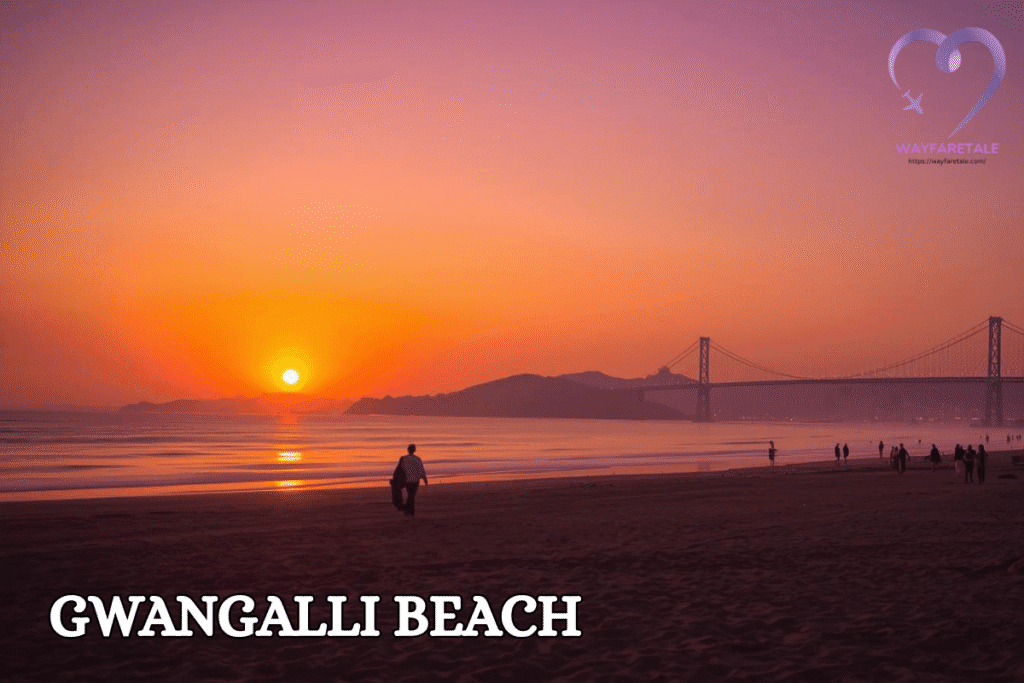
As evening approached, I drove to Gwangalli Beach, known for having the best views of the iconic Gwangan Bridge. This beach has a more sophisticated vibe than Haeundae, with upscale cafes and restaurants lining the waterfront.
I found a beachfront cafe and watched the sunset while sipping on a traditional Korean tea. As darkness fell, the Gwangan Bridge lit up with colorful LED lights that change patterns throughout the evening. The bridge’s reflection on the water creates an absolutely stunning scene.
RESTAURANT RECOMMENDATION: If you’re hungry, the streets behind Gwangalli Beach have excellent seafood restaurants specializing in raw fish (hoe). Many have tanks where you can pick your fish, similar to Jagalchi but in a more upscale setting.
Day 5: Busan to Jeonju – Korea’s Culinary Capital
– Distance covered: 230 KM
– Total drive time: 3 HRS
– Overnight in: Jeonju (Traditional Hanok Village)
After two incredible days in Busan, it was time to head inland toward Jeonju, a city famous for its traditional culture, beautiful hanok village, and most importantly – food! Jeonju is considered the birthplace of bibimbap and the culinary heart of Korea.
The drive from Busan to Jeonju takes about 3 hours via the highway. I left Busan around 9 AM after a final walk along Haeundae Beach, stopping at a convenience store to grab some kimbap and banana milk for the road (Korean convenience stores are excellent for road trip snacks!).
The highway took me through Korea’s rural heartland, past endless rice paddies, small farming villages, and gently rolling hills. Korean highways have regular service areas every 30-40 km, and I stopped at one for coffee and to stretch my legs. The rest areas in this region sell local specialties – I picked up some traditional rice cakes to try.
ARRIVING IN JEONJU
I arrived in Jeonju around noon and immediately felt the difference from the coastal cities. Jeonju has a slower, more traditional atmosphere. The city is famous for preserving Korean culture, traditional crafts, and culinary heritage.
Driving into Jeonju Hanok Village can be tricky as the streets are narrow and parking is limited. I recommend parking at one of the large public parking lots on the edge of the village (₩2,000-3,000 for a few hours) and exploring on foot. The hanok village itself is best experienced by walking anyway.
JEONJU HANOK VILLAGE
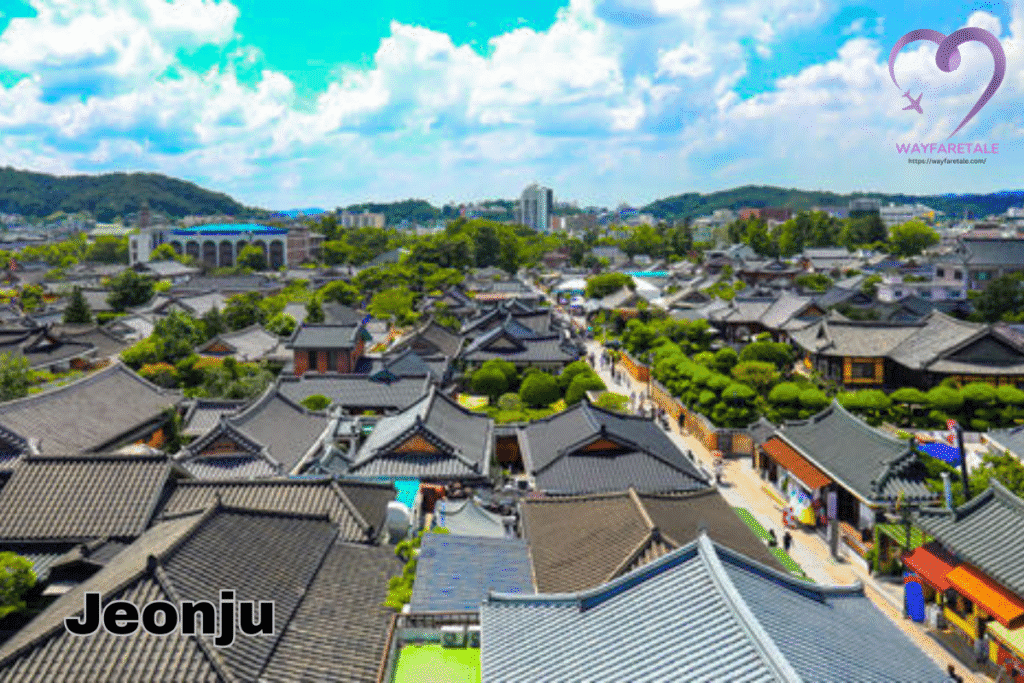
Jeonju Hanok Village is home to over 800 traditional Korean houses (hanok), making it one of the largest hanok villages in Korea. Unlike Bukchon in Seoul, Jeonju’s hanok village is more commercialized but also more accessible, with many buildings converted into museums, guesthouses, restaurants, craft shops, and cultural centers.
Walking through the village’s narrow alleys, surrounded by traditional wooden houses with curved tile roofs, I felt transported to Korea’s past. The village successfully balances preservation with tourism – yes, there are souvenir shops and modern cafes, but the traditional architecture and cultural activities remain authentic.
THINGS TO DO IN JEONJU HANOK VILLAGE:
1. Gyeonggijeon Shrine
My first stop was Gyeonggijeon Shrine, built in 1410 to house the portrait of King Taejo, the founder of the Joseon Dynasty. The shrine is beautifully maintained with manicured gardens and traditional architecture. Entrance is ₩3,000, and the peaceful grounds provide a nice escape from the busy village streets.
2. Jeondong Cathedral
Just outside the hanok village stands Jeondong Cathedral, a stunning Romanesque-style Catholic church built in 1914. The contrast between this Western-style church and the surrounding Korean traditional buildings is striking. The church is free to enter (when services aren’t happening), and the interior is beautifully decorated.
3. Hanok Village Traditional Activities
Throughout the village, you’ll find opportunities to try traditional Korean activities:
- Hanbok rental (₩15,000-20,000 for a few hours) – walking around in traditional Korean dress
- Hanji craft making – creating items from traditional Korean paper
- Traditional tea ceremonies at various tea houses
- Makgeolli tasting – trying traditional Korean rice wine
I rented a hanbok and spent the afternoon wandering the village in traditional dress. It enhanced the experience immensely, and locals were extremely friendly and complimentary.
THE BIBIMBAP TRAIL – JEONJU’S CULINARY ADVENTURE
Now, let’s talk about what Jeonju is really famous for – the food! Jeonju bibimbap is considered the best in Korea, and the city takes its culinary reputation seriously. Traditional Jeonju bibimbap includes over 30 different ingredients, all locally sourced and prepared according to recipes passed down through generations.
I had researched several famous bibimbap restaurants and decided to try Gogung, one of the most renowned establishments. The restaurant has been serving traditional Jeonju bibimbap for decades.
When my bibimbap arrived, I understood immediately why it’s so famous. The bowl was enormous, filled with carefully arranged vegetables, beef, egg yolk, and gochujang (red pepper paste) on top of perfectly cooked rice. Each ingredient tasted fresh and was prepared to perfection. The side dishes (banchan) that accompanied the bibimbap were equally impressive – at least 15 different small plates!
FOOD TIP: Mix everything together thoroughly before eating (that’s what bibimbap means – “mixed rice”). The combination of flavors and textures is incredible. The meal cost ₩12,000, which felt like a steal for the quality and quantity of food.
But I didn’t stop at bibimbap! Jeonju is famous for several other dishes:
Jeonju Kongnamul Gukbap (bean sprout soup with rice) – I tried this for dinner at a local restaurant. The hot, savory soup with bean sprouts, rice, and side dishes was incredibly comforting.
Choco Pie and Makgeolli – In the evening, I joined locals at a traditional makgeolli bar. Pairing sweet Choco Pies with traditional rice wine might sound odd, but it’s a beloved combination in Jeonju. The slightly fizzy, milky makgeolli complemented the sweet snacks perfectly.
JEONJU HANOK VILLAGE AT NIGHT
As evening fell, the hanok village transformed. Traditional lanterns illuminated the streets, creating a romantic, almost mystical atmosphere. Many visitors had left, and the village felt more peaceful and authentic.
I walked to Omokdae and Imokdae Pavilions, two historic sites on hills overlooking the village. From here, the night views of the hanok roofs and the modern city in the distance were spectacular. This is definitely the best viewpoint in Jeonju.
Where to Stay in Jeonju?
Staying overnight in a traditional hanok in Jeonju Hanok Village was an absolute must for me. I booked a hanok guesthouse through Booking.com, and it was one of the most memorable nights of my trip.
The hanok featured traditional ondol (heated floor) sleeping arrangements, beautiful wooden architecture, and a peaceful courtyard. The owners were incredibly welcoming and provided recommendations for restaurants and activities. Breakfast was included – traditional Korean breakfast with rice, soup, and various side dishes.
The only considerations: hanok accommodations have thin walls (you can hear neighbors), and sleeping on the floor might not suit everyone. But for cultural authenticity, nothing beats a hanok stay. Prices range from ₩50,000-120,000 depending on the season and specific guesthouse.
Book your hanok stay in Jeonju on Booking.com or Agoda
PARKING TIP FOR HANOK STAYS: Most hanok guesthouses don’t have private parking. Ask your host in advance about parking options. Usually, there are public lots nearby where you can park overnight for ₩5,000-10,000.
Day 6: Jeonju to Seoraksan National Park – Mountain Majesty
– Distance covered: 320 KM
– Total drive time: 4 HRS 30 MIN
– Overnight in: Sokcho (near Seoraksan National Park)
After a traditional Korean breakfast at my hanok guesthouse, I reluctantly said goodbye to Jeonju. Today would be the longest drive of the trip – from Korea’s culinary heartland to its most spectacular mountain scenery at Seoraksan National Park.
I left around 8 AM to make the most of the day. The drive took me northeast through Korea’s interior, and I was constantly impressed by how the landscape changed. From Jeonju’s flat plains, the terrain gradually became more mountainous as I approached the east coast.
HIGHWAY TIP: The route passes through several tunnels cutting through mountains – some are over 10 km long! Korean highway tunnels are well-lit and maintained, but they can feel endless. The longest tunnel on this route is about 11 km, which took nearly 10 minutes to drive through.
I stopped at a highway service area around the halfway point for lunch. These rest stops continue to impress me – I had a bowl of delicious jjajangmyeon (black bean noodles) and coffee for under ₩10,000.
ARRIVING AT SEORAKSAN NATIONAL PARK
I arrived at Sokcho, the gateway town to Seoraksan National Park, around 1 PM. Sokcho is a small coastal city that serves as a base for exploring the park. After checking into my guesthouse and dropping off my bags, I drove the short 15 minutes to Seoraksan’s main entrance.
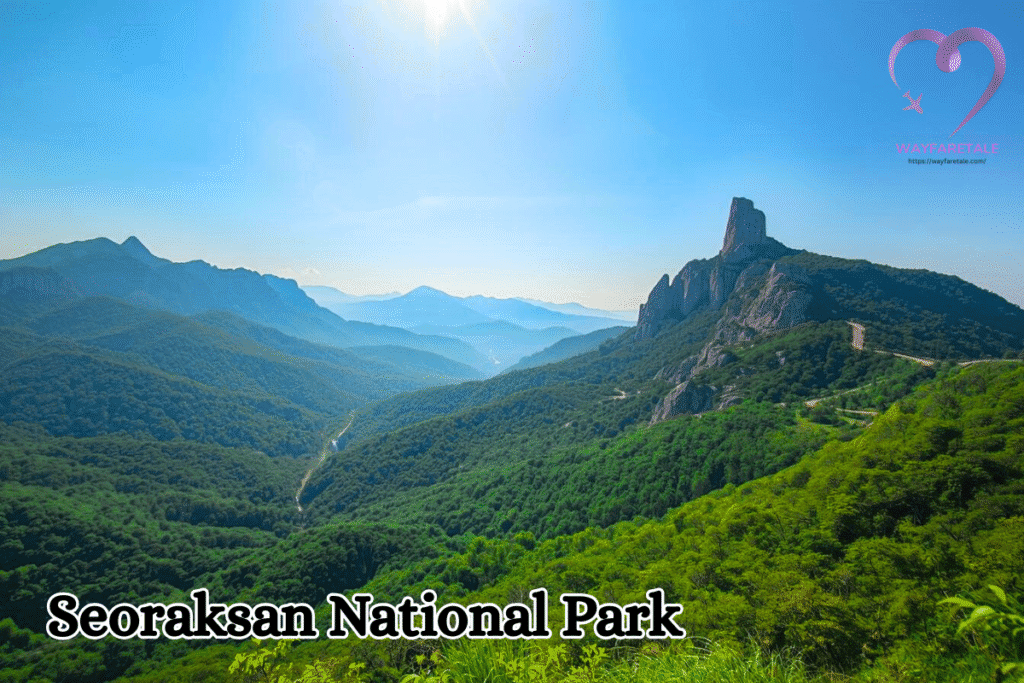
Seoraksan National Park is one of Korea’s most beautiful national parks and a UNESCO Biosphere Reserve. The park features dramatic granite peaks, ancient temples, waterfalls, and some of the best hiking in the country. The name “Seorak” means “snowy peaks,” and in autumn, the mountains are absolutely spectacular with fall foliage.
PARKING: The main parking lot near Sogongwon (Seorak District Office) charges ₩4,000 for the day. It’s a large lot but fills up quickly on weekends and during peak foliage season. Arrive early or consider taking a bus from Sokcho.
The park entrance fee is ₩3,500 per person.
SINHEUNGSA TEMPLE
My first stop was Sinheungsa Temple, just a 10-minute walk from the parking area. This ancient Zen Buddhist temple dates back to 652 AD and sits at the base of the mountains surrounded by forest.
The temple complex is beautiful, with colorful buildings and the peaceful sound of monks chanting. But what really draws crowds is the massive bronze Buddha statue (Jwabul) sitting in meditation. At 14.6 meters tall, it’s impossible to miss. The serene expression on Buddha’s face with the dramatic mountain backdrop makes for an incredible sight.
GWONGEUMSEONG FORTRESS CABLE CAR
From the temple, I walked to the cable car station for the ride up to Gwongeumseong Fortress. The cable car (₩11,000 round trip) climbs 670 meters up the mountain, offering increasingly spectacular views of the peaks and valleys.
The cable car was crowded – I waited about 30 minutes in line – but the ride itself only takes 5 minutes. From the top station, it’s a 10-15 minute hike up stone steps to the fortress ruins.
Gwongeumseong Fortress was built during the Goryeo Dynasty and served as a strategic military position. Today, only stone walls and foundations remain, but the views are absolutely breathtaking. You can see Sokcho city, the East Sea, and the surrounding mountain peaks. The rock formations at the fortress are dramatic, with huge granite boulders balanced precariously on the mountainside.
PHOTOGRAPHY TIP: The sunset views from the fortress are legendary. If you time it right (check sunset time in advance), you can catch golden hour light illuminating the mountains and the sea. Just be aware that the last cable car down is around 6 PM in winter and 7 PM in summer.
BISEONDAE ROCK AND YUKDAM WATERFALL
Back at ground level, I decided to do one of the shorter hiking trails before dark. I chose the trail to Biseondae Rock and Yukdam Waterfall, which is relatively easy and takes about 30-40 minutes each way.
The trail follows a mountain stream through dense forest. Yukdam Waterfall (“Six Pool Waterfall”) cascades down granite rocks into six pools – it’s beautiful but not as impressive as I expected, probably because there hadn’t been much rain recently.
Continuing to Biseondae Rock, I understood why this spot is popular. The massive granite rock formation offers views of the valley and the stream below. Legend says that fairies used to come down to bathe in the stream here – hence the name “Flying Fairy Rock.”
By the time I finished this hike, it was getting dark, so I headed back to Sokcho for dinner.
SOKCHO SEAFOOD AND DAKGANGJEONG
Sokcho is famous for its seafood and a unique dish called dakgangjeong (sweet and spicy fried chicken). I found a local restaurant near the waterfront and ordered both grilled fish and dakgangjeong. The chicken was incredibly addictive – crispy, sweet, spicy, and garlicky all at once. I can see why it’s a regional specialty.
After dinner, I walked along Sokcho’s waterfront promenade, watching fishing boats return to harbor. The salty sea air after a day in the mountains felt refreshing.
Where to Stay Near Seoraksan?
I stayed at a small family-run guesthouse in Sokcho, about 15 minutes from the park entrance. The accommodation was simple but comfortable, with parking available. The owners were friendly and provided maps and hiking advice.
Sokcho has plenty of accommodation options from budget guesthouses to hotels. If you’re planning serious hiking, staying closer to the park entrance (near Seorak-dong) might be more convenient, though more expensive.
Book your Sokcho/Seoraksan accommodation on Booking.com or Agoda
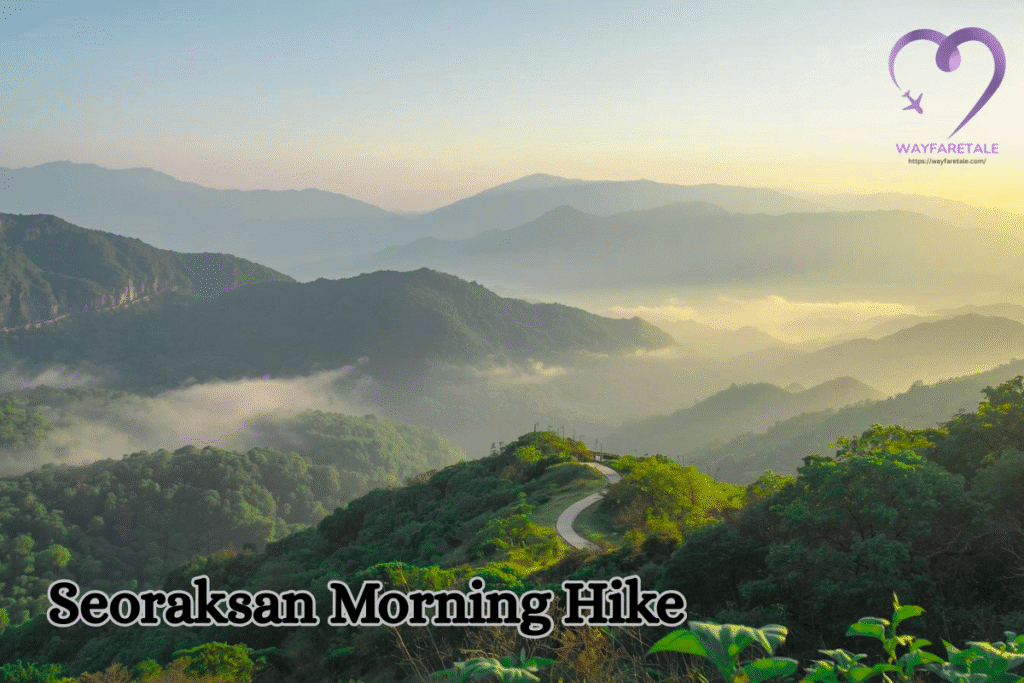
Day 7: Seoraksan Morning Hike and Return to Seoul
– Distance covered: 200 KM (including morning hike + drive to Seoul)
– Total drive time: 3 HRS (Sokcho to Seoul)
– End point: Seoul (Incheon Airport)
My final full day in South Korea started early. I wanted to do a proper morning hike in Seoraksan before the long drive back to Seoul.
ULSANBAWI ROCK HIKE
I chose to hike to Ulsanbawi Rock, one of Seoraksan’s most iconic and challenging trails. I arrived at the park entrance at 6:30 AM – early enough to avoid crowds and catch the morning light on the peaks.
The hike to Ulsanbawi is 3.8 km one way and involves climbing 888 steep metal stairs near the summit. The trail starts easily enough, following a mountain stream through forest. About halfway, you pass Heundeulbawi (Rocking Rock) – a massive boulder that supposedly rocks when you push it (though I couldn’t get it to move!).
The real challenge begins when you reach the metal staircase. These stairs are built directly into the granite cliff face, climbing almost vertically. My legs were burning, and I had to stop several times to catch my breath. But with each step, the views became more dramatic.
Reaching the top of Ulsanbawi after 2 hours of hiking was incredibly rewarding. The 360-degree views from the summit are simply stunning – jagged granite peaks stretching in every direction, the East Sea glittering in the distance, and the valley far below. I sat on the rocks for 30 minutes, eating snacks and soaking in the scenery.
HIKING TIPS:
- Start early to avoid crowds and heat
- Bring plenty of water (at least 1.5 liters)
- Wear proper hiking shoes with good grip
- The stairs can be scary if you’re afraid of heights
- Allow 3-4 hours round trip
- Difficulty level: Moderate to challenging
The descent was easier on the lungs but harder on the knees. I made it back to the parking lot by 10:30 AM, sweaty but exhilarated.
SOKCHO FISH MARKET BREAKFAST
Before leaving Sokcho, I stopped at the local fish market for a late breakfast. I had grilled mackerel with rice and banchan at one of the small market restaurants – simple, fresh, and delicious. This is how locals eat, and it’s infinitely better than any tourist restaurant.
THE DRIVE BACK TO SEOUL
Around noon, I began the drive back to Seoul. The route takes you along Korea’s east coast initially, offering occasional sea views, before turning inland toward the capital.
The highway passes through several mountain tunnels and offers scenic views of Korea’s countryside. I made one final stop at a service area to buy some last-minute souvenirs and snacks to bring home.
SCENIC DETOUR OPTION: If you have extra time and want a more scenic route, consider taking the coastal road (Route 7) part of the way instead of staying on the highway the entire time. It adds about an hour but offers beautiful ocean views.
I arrived in Seoul around 3 PM, with enough time to return my rental car, check in for my flight, and reflect on an incredible week exploring South Korea.
What I Skipped and What I’d Suggest Skipping
Based on my experience and research, here are places I either skipped or would suggest skipping if you’re short on time:
JEJU ISLAND – I skipped Jeju on this one-week itinerary simply because it requires at least 3 full days to do justice, plus flight time. Jeju is absolutely worth visiting (with stunning volcanic landscapes, beaches, and unique culture), but it doesn’t fit well into a one-week road trip. Save it for a separate trip or include it if you have 10+ days.
DMILITARIZED ZONE (DMZ) – While historically significant, DMZ tours from Seoul are very touristy and scripted. If you’re interested in Korean history and the division, it’s worthwhile. But it’s not essential for a first-time road trip focused on natural beauty and culture.
INCHEON CHINATOWN – Incheon’s Chinatown is fine but nothing special compared to actual Chinatowns in other Asian cities. If you’re passing through Incheon, skip it unless you have specific interest.
DAEGU – Korea’s fourth-largest city didn’t make my itinerary. While it has some attractions, it doesn’t offer anything you can’t see better elsewhere. Your time is better spent in Gyeongju, Busan, or Jeonju.
NAMI ISLAND – This is Korea’s most famous tourist trap. It’s a small island planted with tree-lined paths, made famous by Korean dramas. Unless you’re a huge K-drama fan, the long journey from Seoul isn’t worth it. Seoraksan offers infinitely better natural scenery.
LOTTE WORLD – Seoul’s massive indoor/outdoor amusement park. Skip unless you’re traveling with children or are a serious theme park enthusiast.
Final South Korea Road Trip Tips and Reflections
Language and Communication
English is not widely spoken outside major tourist areas and Seoul. I highly recommend downloading:
- Papago (Naver’s translation app) – better than Google Translate for Korean
- KakaoMap or Naver Map for navigation (Google Maps is less reliable in Korea)
- KakaoTalk for communication with accommodation hosts
Learning basic Korean phrases will enhance your experience and is greatly appreciated by locals:
- “Annyeonghaseyo” (Hello)
- “Gamsahamnida” (Thank you)
- “Juseyo” (Please give me)
- “Eolmayeyo?” (How much?)
Money Matters
- Credit cards are widely accepted, but carry cash for markets, small restaurants, and parking
- ATMs are everywhere, but not all accept foreign cards – look for 7-Eleven or family marts
- Tipping is not customary in Korea
- Many attractions and restaurants only accept cash
Best Times to Avoid Crowds
- Visit major attractions early morning (7-8 AM) or late afternoon
- Avoid weekends at popular spots like Seoraksan and Busan beaches
- Korean holidays (Chuseok and Seollal) mean massive crowds and traffic – avoid these periods
What I Wish I’d Known Before Starting
- Korean rest stops are amazing – I should have budgeted more time to enjoy them
- Hanok stays are special but not for everyone – if you need comfort over authenticity, book a hotel
- Food portions are huge – order less than you think you need
- Hiking in Korea is serious – locals hike in full gear; don’t underestimate trails
- SIM cards or pocket WiFi are essential – get one at the airport immediately
My Favorite Experiences
Looking back on this incredible week, my absolute highlights were:
- Haedong Yonggungsa Temple at sunrise – the most beautiful temple setting I’ve ever seen
- Eating fresh sashimi at Jagalchi Market – as authentic as it gets
- Staying in traditional hanok in Gyeongju and Jeonju
- Hiking Ulsanbawi Rock at dawn – challenging but rewarding
- Wandering Gamcheon Culture Village – like stepping into a rainbow
Would I Do This Road Trip Again?
Absolutely! South Korea exceeded my expectations in every way. The combination of ancient culture, stunning natural beauty, incredible food, and warm hospitality made this one of my favorite road trips ever.
If I could do it again, I’d add 3 extra days to include Jeju Island and spend more time hiking in Seoraksan. I’d also learn more Korean before the trip to communicate better with locals.
South Korea Travel Resources
Planning your trip to South Korea soon? Below are some useful links to travel booking resources that I personally use:
- Find the BEST FLIGHTS to Seoul using KIWI.com or Skyscanner – both offer comprehensive route options and competitive prices
- Rent your car at the BEST RATE with Rentalcars.com or DiscoverCars
- Find your PERFECT ACCOMMODATION on Booking.com or Agoda (often better rates for Asian hotels)
- Always get TRAVEL INSURANCE – check SafetyWing or Heymondo for comprehensive coverage
- Book the best-rated GUIDED TOURS on GetYourGuide or Viator
- Get a T-Money Card at the airport for public transport and some highway tolls
- Consider KTX Pass if combining your road trip with train travel
More South Korea Travel Guides
- Best Hiking Trails in Seoraksan National Park
- Ultimate Seoul Food Guide – Where to Eat Like a Local
- Jeju Island Road Trip: Complete 3-Day Itinerary
- Korean Temple Stay Experience: What to Expect
- Budget Travel in South Korea: Daily Costs Breakdown
I hope you found this South Korea road trip itinerary helpful! This incredible country offers something for every type of traveler – history buffs, foodies, nature lovers, and culture enthusiasts will all find something to love. The compact size makes it perfect for a one-week road trip, and the excellent infrastructure means you can pack in a lot without feeling rushed.
Safe travels, and enjoy your Korean adventure! 한국 여행을 즐기세요!